The Bugle App
The Bugle App
Your local news hub
Latest issueFeaturesSportsWhat's OnVacanciesKCR24 Hour Defibrillator sitesSocial Media
The Bugle App

History of our LGA


Best of 2025: Tales of Old Gerringong - The battle of Omega Public School

28 December 2025, 7:00 PM

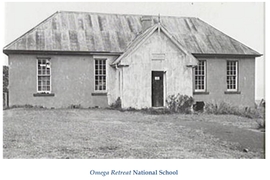
Please note - this article was first published on 4 March My father Clive Emery loved history, and often recorded local stories, some of which were written up in The Kiama Independent, the precursor to The Bugle. Looking through my father’s many stories, I came across a story my great-grandfather recalled from his days at Omega Public School. It makes for an amusing tale.Before I hand over to my father’s writing I need to set the scene with a number of points.Firstly: the railway in the 19th Century was a boon to country areas. The South Coast Railway ended at Bombo in 1887. It was proposed to be extended to Bomaderry but there was one problem. The mountains rolled steeply into the sea between Gerringong and Omega flats. It meant that five tunnels had to be built. In those days there were none of the boring machines which make tunnelling relatively easy these days. Tunnelling required the services of railway workers known as fettlers, who would dig the tunnels using a combination of dynamite and pick axes. They would set up a camp with their families. They were tough, hard men and their families were equally tough. While the men worked, their children would attend the local school, in this case Omega Public School, which was established in 1860 to cater for local farm families. The school, originally known as Omega Retreat School, finally closed in 1945. It took six years for the railway line from Bombo to Bombaderry. Omega Station opened in 1893.Secondly: Omega Public School was located in what is now a private house about half down the hill towards Gerringong on the left hand side of the road as you head South. Children would usually walk ( no buses or private cars) to school. After school they would head home and start their chores on the farm. There was no television or computer games back then. Many children had dogs. The dog would follow them everywhere, even to school, sitting outside the fence waiting for their owner to return home after school. These dogs had a loyalty to their owner and would do anything to protect them.One of these children was a boy named James J. Quinn, the ‘hero’ of our story. There have been many great families in Gerringong and one of those is the Quinn family. In sport they have excelled. The most famous was a farmer named Paul Quinn who played for Gerringong rugby league. He represented Australia and later played for Newtown. He used to travel to Sydney from Gerringong for training after milking. The person he travelled with used to complain that on the trip all Paul did was sleep.  But back to the story as my father wrote it. From Clive Emery, longtime Gerringong residentPrior to my family leaving Omega, the railway, which had formally ended at Porter’s Garden Beach, or Bombo, was in the process of being extended to Nowra. The necessity of quarrying through the rocky spurs running down to the sea caused the planners to baulk, but now the work had begun on the four tunnels. The biggest was at the Omega end, and work commenced at either side to meet at the middle. This was achieved with a disparity of only two inches (five centimetres). The fettlers pitched their camps at the job, and their children, some 16 years old, attended the Omega, swelling its enrollment to nearly 100. The boys had been reared on hard times, where only the fittest survive. By their numerical as well as physical strength they proposed to take over the school playground. Fights almost to the death ensued but the fettler’s sons had not gauged the toughness of the farmer’s sons. The battles raged during every dinner hour down by the fig tree while Richard Hall, the teacher, was at lunch. Bruised and battered the game little lads of Omega gradually fell to their bigger opponents, and it was left to James J. Quinn of Omega to uphold the honour of the school. He had to take on the biggest and toughest of the fettlers. It was a fight that had to be fought, and in recollection it is suspected that the teacher, Richard Hall, knew that, and kept wisely and discreetly inside during the conflict. There was no cheering that would have brought out the teacher, just a grunting and punching match for the whole dinner hour, while the supporters had bunched into their respective camps to watch.James Quinn, overmatched by his larger opponent, refused to give in, and fought with the tenacity of a tiger. There was one stage when he tripped on a root of the figtree and his assailant fell on him to deal the killer blow. That was deemed unfair by both camps and they were hauled apart and made to stand up and fight.Early in the fight James’ blue cattle dog, who always followed the three Quinn boys Tom, Jim and Peter to school, came in to lend support. He rushed in and grabbed the fettler boy by the calf of his leg. With a roar of pain the fettler boy kicked away the dog but he had left his mark. He prowled around at the back of the crowd of onlookers during the rest of the fight, hoping for another opportunity.It never came. The five minute bell rang and the antagonists were pulled apart and taken to the creek nearby to wash themselves down and prepare for school again.As for the fight, neither had won. A silent truce manifested itself and the two camps settled into a more or less peaceful coexistence.

Opening of Gerringong Town Hall

07 December 2025, 7:00 PM

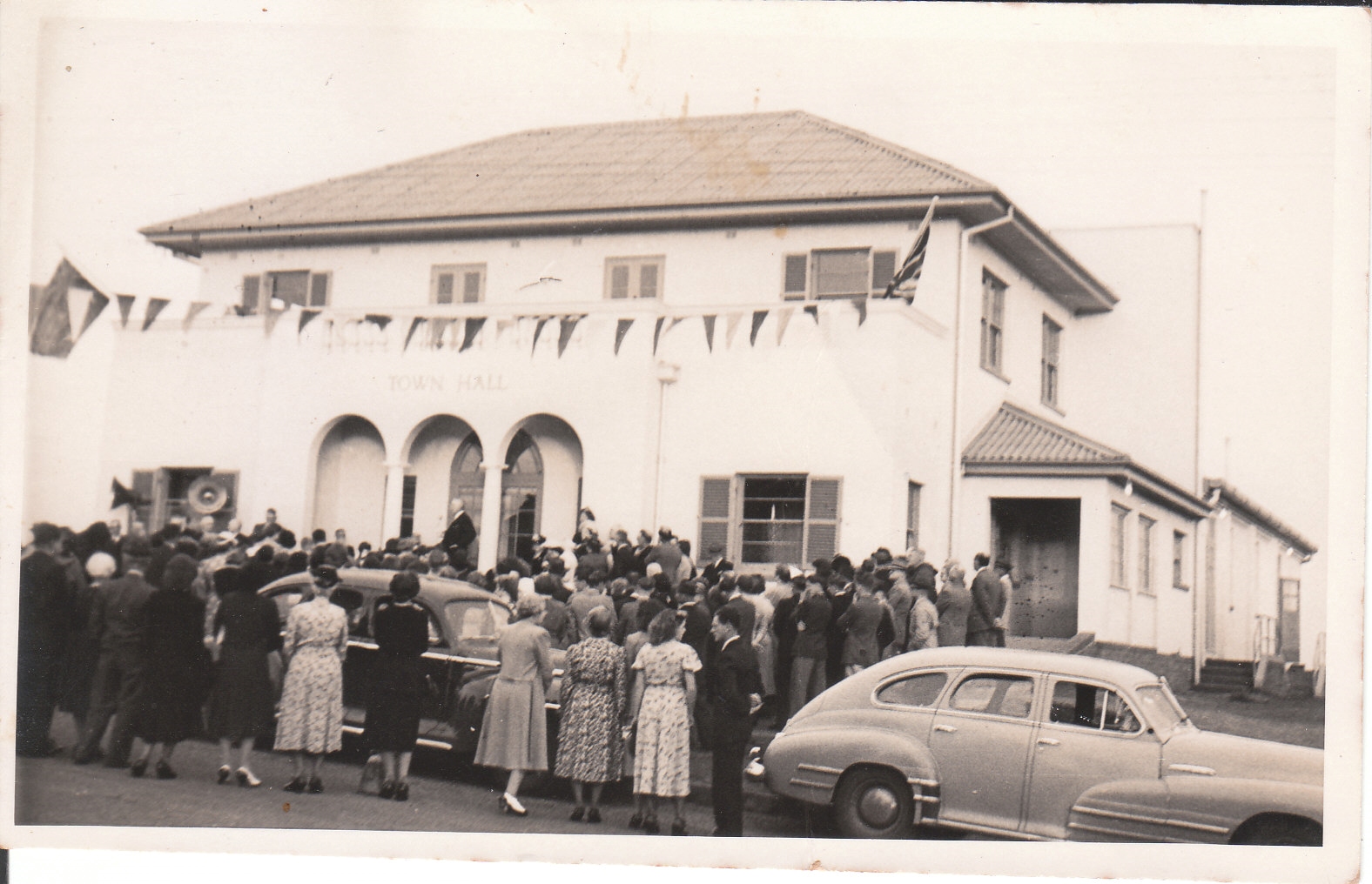
The old School of Arts hall, where the GLaM is now, was the centre of all social activities in Gerringong for many years.Whenever there was a 21st birthday, engagement party, dinner dance, celebration night after Gerringong had won a premiership in sport or any other great social occasion, it was held in this building.My personal memory of this wonderful building was that it was for many years, the Scout and Guide Hall.Many a splinter was picked up sliding on the floor during games.But after the end of the Second World War, it was felt that a new, larger and more solid building was needed to reflect the progress our town was making.So, it came to be that a proposal was put forward by the Mayor G.E. Chittick and the Town Clerk A.M. Trevallion to gauge the interest from the community.There was certainly enough interest. This proposal was sent out in 1946 and here is a ticket to the Grand Civic Ball to commemorate the opening of the hall in November 1948 by J.J. Cahill just two years later.The tickets cost five shillings, about 50 cents.Gerringong Town Hall has been a centrepiece of the town ever since.Any person living in Gerringong after the end of the war would have fond memories of going to functions there.My personal favourites were going to the pictures and performing in the school play in the last term of the year at Gerringong Public School, which, at the time, was just next door.We want to hear from you - Take The Bugle survey here

When Kingsford Smith took flight at Gerroa

06 December 2025, 2:00 AM

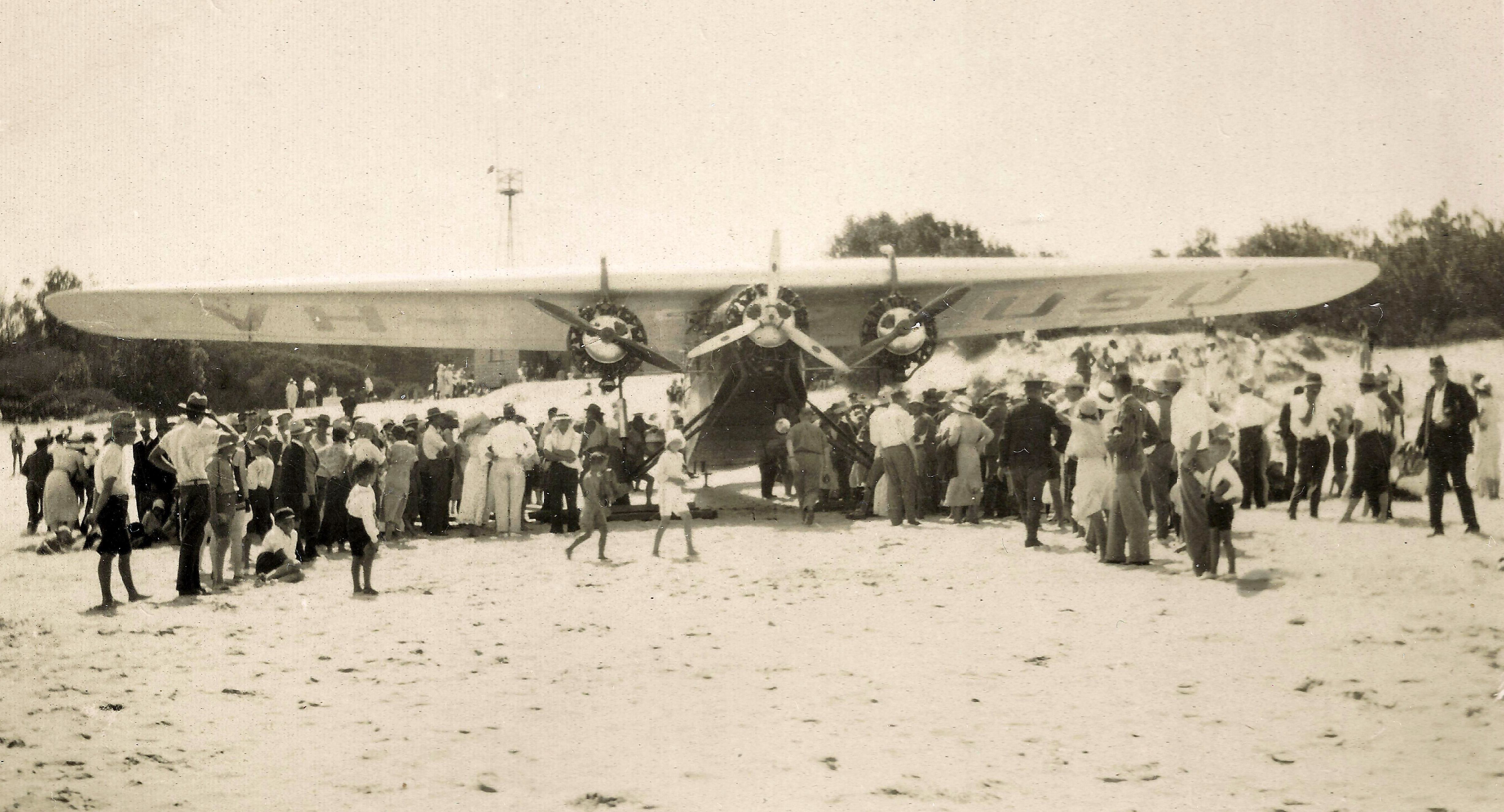
On January 11, 1933 Sir Charles Kingsford Smith and his crew used Gerroa’s Seven Mile Beach as the take-off point for a flight to New Plymouth, New Zealand.On board was a special batch of cargo - several envelopes postmarked January 10, the day before Kingsford Smith’s Seven Mile beach take-off, and signed by crew and passengers.Known as airmail cover, and carried on historic flights, only five of the valuable collector's items are thought to exist - with one housed in Gerringong’s History Museum.The letter, carried by “Smithy” and signed by three crew and two passengers, thanked the town’s local ladies for providing a box of peaches to the aviator and his crew before their sandy launch.“This event established the first airmail route between Australia and New Zealand and was certainly a significant part of our local history,” says Gerringong Historical Society secretary Joy Fullager.Joy says the airmail cover, sourced by South Coast stamp collector John Graham and donated to the museum two years ago to mark the 90th anniversary of the historic flight, was a welcome addition to GLaM’s dedicated Charles Kingsford Smith collection.“People who visit the Gerringong Heritage Museum are always very interested in the items related to Charles Kingsford Smith,” she says.“The museum has a video with footage of Charles Kingsford Smith landing on Seven Mile Beach in 1933, which is very popular with visitors.“The video’s commentary is by Gerringong’s Clive Emery, who watched the historic flight when he was a child.”Just two years after the famous aviator’s take-off from Gerroa to NZ, Kingsford Smith and co-pilot Tommy Pethybridge went missing on November 8, 1935 while attempting to break the flight speed record between England and Australia.The final resting place of the pilot, crew, and plane has baffled historians for generations.Now to mark the 90th anniversary of the disappearance of Kingsford Smith aboard his legendary Lockheed Altair 8D aircraft, Lady Southern Cross, award-winning Australian writer, filmmaker, and explorer Damien Lay has released his book Of Air and Men.Lay is considered one of the world's leading authorities on the disappearance of the Lady Southern Cross and has spent more than two decades researching and documenting the historic event.Of Air and Men not only tells the story of the famed aviator - the first person to circumnavigate the globe and one of the greatest long-distance flyers in history - but documents Lay’s quest to find his final resting place and the impact Kingsford Smith’s disappearance had on his family.The wreckage of the Lady Southern Cross was first discovered in 2009, off the Burmese coast, using sonar imaging.Three years and 18 dive expeditions later Lay and his team had recovered more than 40 pieces from the wreck.Charles Kingsford Smith. Many of the dives were over 100 feet in depth in treacherous conditions - not least due to the political turmoil in Myanmar and the threat posed by pirates.“We were diving in the most dangerous conditions on earth,” Lay recalls. “Strong currents, near-zero visibility, political turmoil, pirates, militias, we had no medical evacuation, no safety net. Just determination.”The wreckage found by Lay and his team included timber and fuel lines and the discovery made the modern-day explorer even more determined to “one day … bring the men of the Lady Southern Cross home”.Over the past 20 years, Lay has worked closely with the aviator's son, Charles Arthur Kingsford Smith, who has lived in the US since he was five, as well as the wider Kingsford Smith family, and the Pethybridge family.The book uses historical fiction to document the aviation legend’s life, the mystery surrounding his final flight, and the impact of his disappearance on his family, including his son who was just a toddler at the time.“I have only a few snatches of memory of my father, and I would have greatly enjoyed his love and fellowship growing up but his disappearance just before my third birthday sadly ended that possibility," says the now 92-year-old Kingsford Smith junior.“Adding to the sadness is the frustration that much is unknown about what happened, so we really can't close the book on his life story."Many have offered theories and speculation about what happened.“Damien dedicated years of his life, at vast expense, in searching the area where the plane almost certainly went down, resulting in the most likely theory of what really happened to my father in the Andaman Sea."Of Air and Men is available through Amazon, Booktopia and many independent Australian booksellers.A copy of the book has been donated to the museum, which also houses a model of Kingsford Smith’s Southern Cross and photos from his time in the region.“The Gerringong Historical Society is very appreciative for its copy of the book which has been added to our library,” says Joy.The museum, which is staffed by community volunteers, is open on Fridays and Saturdays from 11am-3pm.We want to hear from you - Take The Bugle survey here

Historian’s new book charts the South Coast’s forgotten coach and rail routes

02 December 2025, 10:00 PM

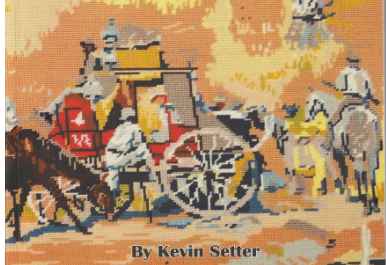
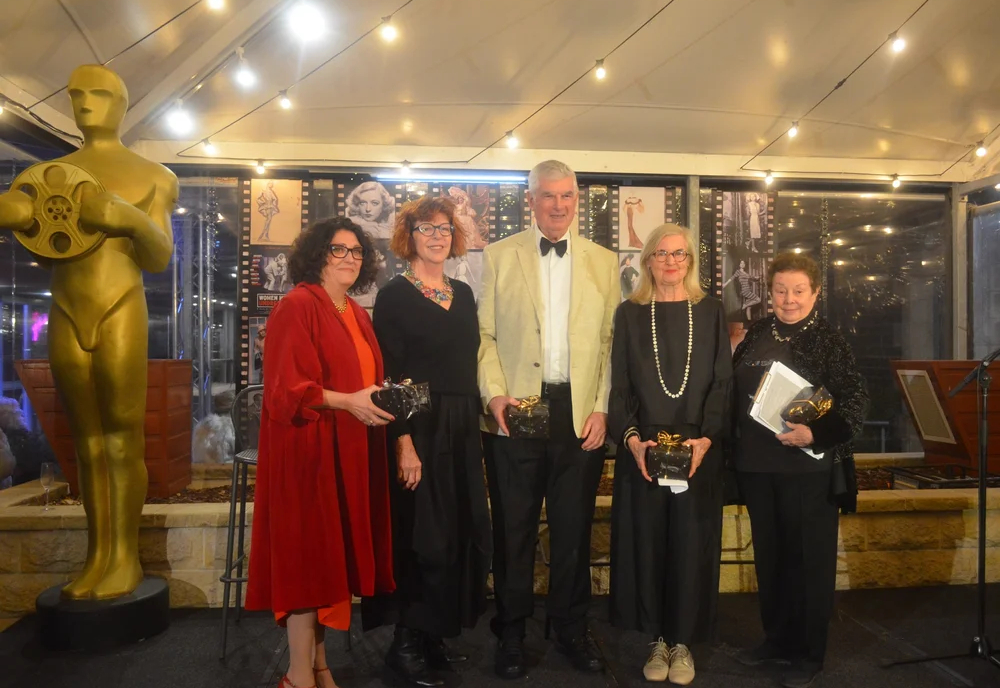
If you’ve ever wondered how people once travelled to and from the South Coast - long before buses, highways or a reliable rail line - historian Kevin Setter has spent years uncovering the answers.The Moruya-based researcher has traced the early transport and mail contracts that linked the railhead at Campbelltown with communities across the Illawarra and South Coast.His new book Stagecoaches and Royal Mail Illawarra Region follows routes through Appin, Bulli, Waterfall and Milton, as well as the connections from Moss Vale through Kangaroo Valley to Nowra and Braidwood. Covering 1837 to 1914, Setter documents everything from passenger conditions to railway delays, coach accidents and shifting mail schedules.Setter said the book “gives account of the conditions the coach drivers and passengers had to endure, placed upon them by the postal authorities and courts in relation to numbers they were permitted to carry in the various coaches; accidents, holdups, disputes between the various drivers”.The 244-page, fully indexed book draws heavily on historical newspapers and original court and rail records. “I use much of the local newspapers to gather all this information,” he said.Setter also used Trove, which he has done for his previous publications. “Even on Trove, there’s gaps in information.” he said.“There’s lots of papers that were destroyed accidentally or maybe through fires and things like that, the old copies were lost.“A lot of records have been lost. They’re just gone unless you can find it in another paper, a lot of the time you’ll get quotes from other areas of things that have happened.”His passion for transport history and drive to learn dates back to his studies in the 1990s. “When I was doing an associate's diploma in local and applied history at New England back in the '90s, I was going through court records and I’d seen where the stagecoaches were registered by the courts.” Those early notes eventually formed the basis for his later work.Setter’s interest also runs through his family - his great grandfather, Jamed Edwards drove coaches in Victoria.He hopes the book will prove useful to anyone researching their own ancestry. “It would be a great book for people doing family history to be able to check what their ancestors were up to.”Through his extensive research, Setter’s work launches you back in time by capturing what early travel really felt like, shaped entirely by mail timetables and the arrival of trains. “People don’t know what others before us had to endure to get around without any means of communication,” Setter said.“They relied on the mail so much to communicate with the city, relied on mail to arrive so they had time to answer it before the outgoing mail went again – especially businesspeople.”The book also includes major incidents from the era.“There’s lots of holdups, lots of accidents – there’s a big fatal accident on Bulli pass at one stage, plus other accidents have occurred that are documented.”Its cover, something Setter created himself years ago, features a tapestry version of a Tom Roberts painting.This is his third transport history title, and he’s already working on the next.“It’s kept me going for the last couple years – I’ve done the three – I got another one in progress of prisoners in the shipwrecks of the Eurobodalla coast – over 30 of them.”He is also preparing a history of the Catholic Church in Moruya. “It’s the sort of thing I’ve had an interest in, doing local history and trying to preserve some of it before it’s lost completely. It gives me a greater appreciation of what people had to endure in the past. I like local history – I’m very, very keen on it.”Setter was the 2023 recipient of the Fergus Thomson OAM Heritage Award for his previous publication Stage Coaches and Royal Mail Southern Eastern NSW 1841–1913.Copies of his new book are available by emailing [email protected] for $40 plus $15.25 postage.

We want to hear from Gerringong's longest lasting families

24 October 2025, 7:00 PM

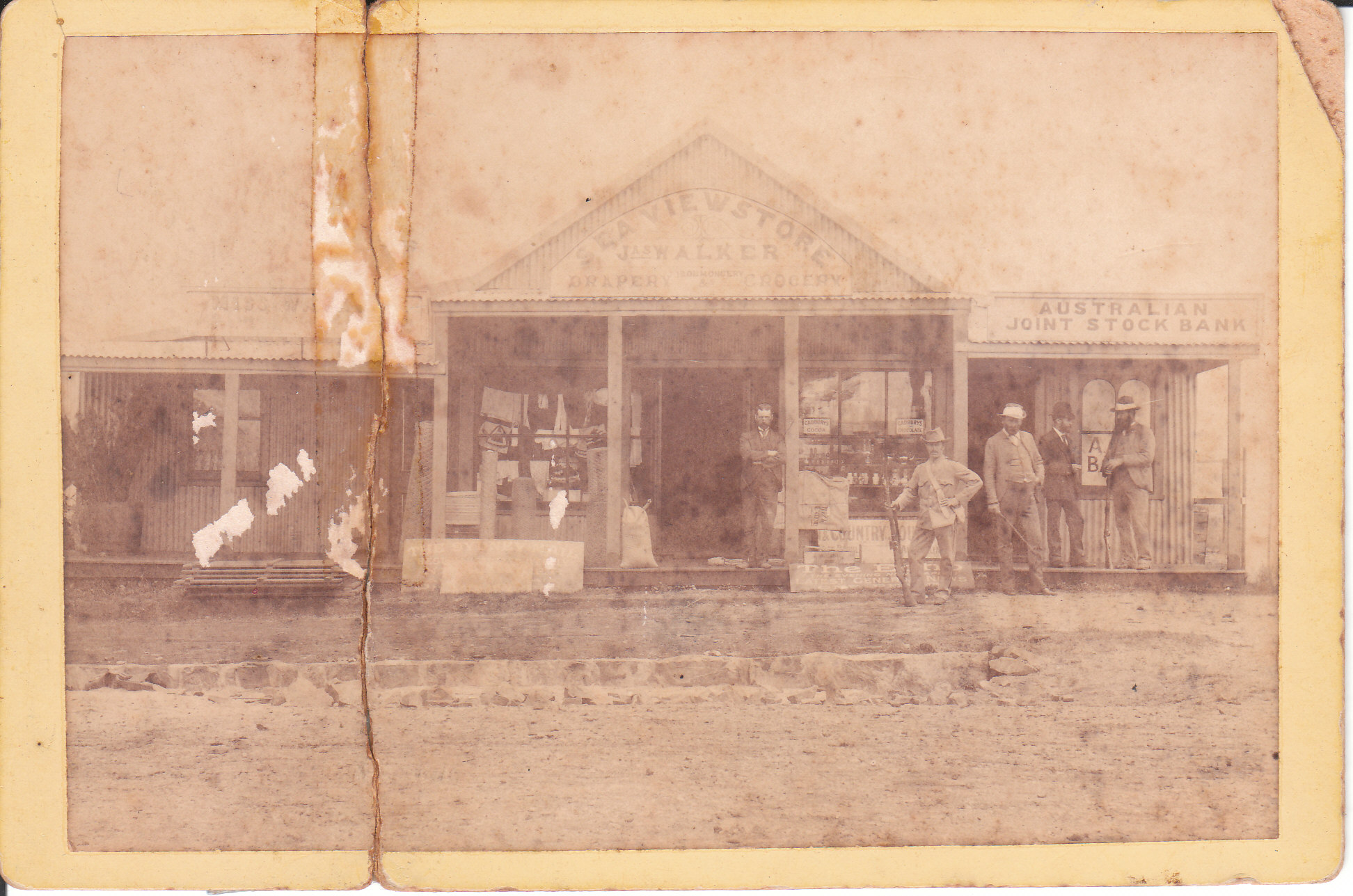
Working at the Gerringong museum the other day, I was having a joke with a lady saying that to be regarded as a local in the town you have to have lived there for more than 40 years.The lady laughed and said that no, you have to have a street or park named after your family. All good fun to pass the time.Like just about every person reading this, there comes a time when you have to clean out the possessions of a family member who has passed away.Often there are many papers and documents to be sorted, some valuable and others less so.When my father died, my family had to do this. I collected all the valuable, interesting stuff and put it into a couple of suitcases.Now to digress for a moment. When the Kiama LGA was first established, Kiama was in charge of the whole area, as it is the case today.The old Walker residence in Gerringong.However, in 1871 the Gerringong residents were not happy with this and established the Gerringong Municipal Council which ran until 1954.That is a story for another day.Going through the suitcase at the GLaM the other day, one piece caught the attention of the assembled (small) crowd.What I found was an Electoral Roll for Gerringong Municipality in 1914.Some names are instantly recognisable and would have many members represented on a similar roll in 2025.Other names have all but disappeared. Maybe the families moved away but another reason could be that there were a lot of girls in the family.As the girls married, the family name disappeared. Speaking of females. Most are mentioned with the occupation of “domestic duties”. Compare that with today.Anyway, I would like to mention just a few. Many of you out there must have lots of other stories to tell from the names. We would like to hear from you.Thomas Bergin is one important one that comes up. He was a man who owned and ran what is now Cronin's pub and is a direct descendant.The Blow family was one my father remembered fondly.The Campbells are a big family in Gerringong, particularly in real estate.I have read so much about the Deverys, especially in the Gerringong CC.The Hindmarsh family, of course, with the famous Alnebank property.Who can go past the Millers.Other names come up: Gray, Johnston, Walker, Langton, Noble and so many others.I could go on with numerous stories about prominent families, either still an important part of Gerringong life today or lost in the mists of time.I suppose I could have offended somebody by not mentioning their family name.Well, if that is the case, or even if it is not, as I said earlier, we here at the Bugle would love to hear some stories about these people who lived so long ago. They all deserve to have their story told.

Gerroa's 100-year-old need for record-breaking speed

16 October 2025, 10:00 PM

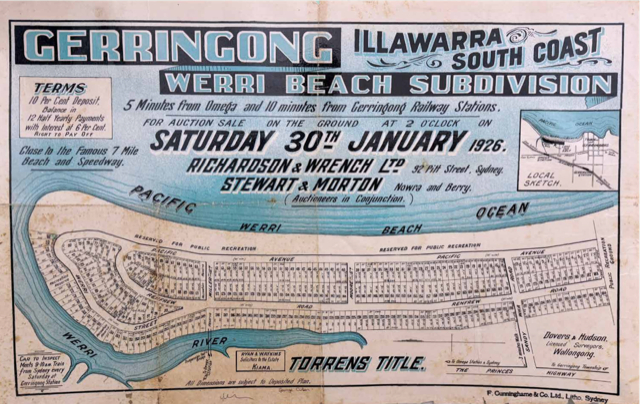
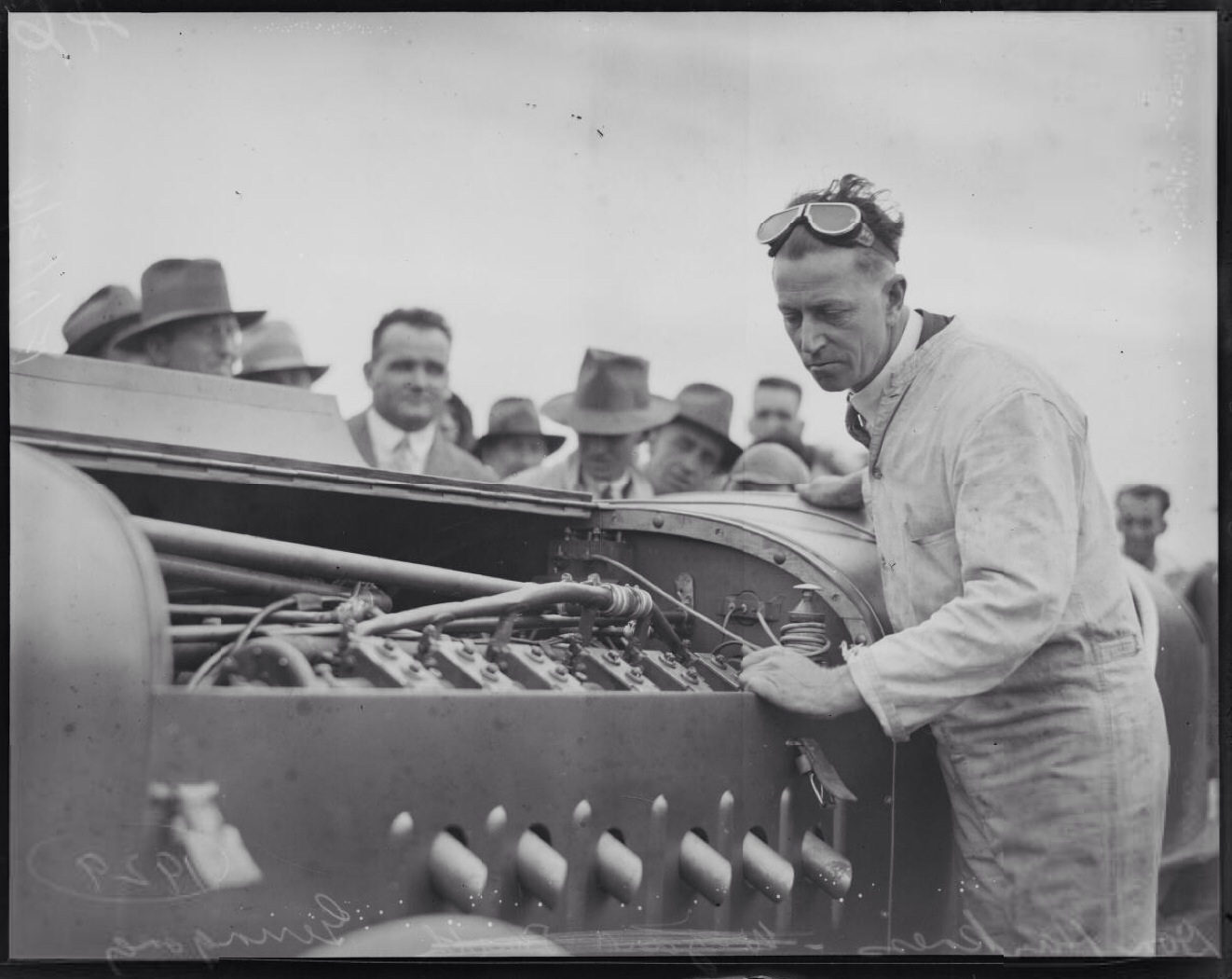
Today marks the 100th anniversary of Seven Mile Beach in Gerroa being the unlikely venue for a moment in history when the 100 miles per hour barrier was broken on the sands. After the Daily Guardian newspaper put up a £50 reward for the first person in Australia to reach the milestone, Don Harkness - an engineer from Sydney - wrote his name into the record books at Gerroa. Back then the beach was known as the Gerringong Speedway, a place where motoring enthusiasts would gather to attend car races hosted by the Royal Automobile Club of Australia. After the first event in May 1925, the Daily Telegraph reported that: “It was by no means an auspicious beginning, as the rain had made conditions anything but pleasant.“Many a car became bogged in the sand on the way to the racing track, while the roads leading down to the beach were so treacherous that at least 20 cars had to be abandoned for the night on the hillside.”Harkness built a speed machine after importing an Overland chassis from the United States.He called his new car “Whitey” and equipped it wih a Hispano Suiza aeroplane engine in his bid to break the national record. On 17 October, 1925, he not only became the first Australian driver to go past the 100mp/h barrier but he reached 107.75m/h (173km/h) as he motored along the flat stretches of Seven Mile Beach.According to a report in The Sunday Times, “the run was made under the worst of conditions seen for years with danger hidden in every sand hole.” A crowd of around 2000 people cheered him in his high-octane mission along the sands.Seven Mile Beach was a popular place for motor racing enthusiasts with clubs from Goulburn, Nowra and Sydney travelling to Gerroa to strut their stuff at the “Speedway”.South Coast History Society, in its recent Recollections issue, recalls that Gerringong Congregational Church took exception to the Club hosting beach racing on the Sabbath with the Nowra Leader reporting “the beach should then not be disturbed by racing on a Sabbath, so that the gentle roll and lapping of the waves on the sea shore will, in the future, continue in its quietude undisturbed”.Council then announced “In view of the council’s resolution not to permit Sunday racing, the club is to be advised to arrange such fixtures for Saturdays.”The beach was also used regularly for horse racing, which had started in the 1860s.Seven Mile Beach was also used as the runway for the first commercial flight between Australia and New Zealand in 1933. Cars lined the beach, shining their headlights to help the pilot, Sir Charles Kingsford-Smith, successfully take off at 2.30am, with thousands of spectators also watching on.Harkness continued his daredevil racing exploits until he was involved in a crash in 1935 and decided to retire.

How the Blow family settled into Foxground’s surrounds

08 October 2025, 7:00 PM

When looking at the history of families in the Gerringong district, some have been around for many generations and are still prominent such as the Millers, Quinns and Campbells. Many others have all but disappeared. One of those is the Blow family.As a child I can remember my father talking about the Blow family from around the Gerringong district. He would regale me with stories about “Joe Blow did this” and “Joe Blow did that”. I actually never remember meeting any of them. Most, it seemed, had left the district before I was grown up. Here is a tale from Clive Emery about a meeting in Foxground for the 150th anniversary of the Blow family coming to the Gerringong district. It mentions a reunion of the family. I do not know the exact year this happened but I am guessing about 1990.A small contingent of The Blow family, accompanied by many friends and pupils of the Foxground school which closed in 1954 met on a patch of prepared pastureland situated beside the oak-lined creek for a picnic lunch to celebrate the 150 years since the original grantee, John Blow, took possession of 300 acres of the fertile Valley floor. Stories are told of the presence of numerous flying foxes in the area at the time, and so the naming of the valley was first Fox Ground, finally grouping the two words for convenience.The temperature of the day was around 20 degrees, made so by an inordinate southerly wind which lowered the usual temperature, but the geniality and friendliness of the group of some 65 celebrants overcame all difficulties and disabilities and around 40 cars lined the banks of the creek where a picnic lunch was held, and conviviality reigned.Several representatives of the early families were present, and tales and remembrances were the order of the day.Douglas Blow, a grandson of the original grantee, used the loudhailer to welcome the invitees and in a speech of explanation, he detailed the series of events in the Blow family throughout the intervening years.On various tables he presented his collection of data which consisted of photos and genealogical history which left no one in doubt of the presence in Foxground of the redoubtable Blow family.It appears John Blow built the original home on what was to become “Lawndale”, Harry Blow on Barham's property, Captain Ernie Blow on H.G. Miller's “Nestor Farm”, Dawson Blow on “Willow Glen”, while Captain Blow's Aides-de- camp farmed on Leaney's farm. In effect, the valley floor and into the foothills of the scrub land through which the Foxground Creek wended its circuitous way southward towards the Broughton creek at Berry, was peopled by family members.The clearing of the land and the felling of the magnificent cedars started, to make way for the utilisation of the land for dairy farming purposes. To this end, a milk factory was eventually built on part of “Willow Glen” beside the road which wound its way along the Valley floor, and from which land was acquired by other settlers. Other roads would go into the hills and mountainsides to service the new selections.Following the luncheon, provided by individuals, Doug Blow again brought his loudhailer to the fore and instructed the gathered groups on the format for the remainder of the evening, introducing various speakers who presented interesting histories on the Blow family. The Mayor of Kiama was welcomed, and addressed the gathering on the part the farming industry had played in the development of the wonderful area which was now the Kiama Municipality, and the Blow family in particular.Following the speeches there was a general get-together of friends and relations and renewal of acquaintances while tales were told and memories recaptured and relived.Schoolmates recalled incidents for examination and discussion, while others pored over the memorabilia displayed, and a small section went on a walk to the home of Harry Blow, now in the possession of Barbara Mathie, to whom generous thanks were offered for allowing her property to be used for the celebration.By four o'clock the party began to disperse. Tables were folded and packed away and the assembly broke up, but not before expressions of gratitude for the event were paid to Doug Blow for the opportunity to meet old friends once more in the beautiful Foxground Valley which had claimed so much of our young lives and loves in days gone by. 

How colour TV made a splash 50 years ago

23 September 2025, 8:00 PM

I have previously written that one of the reasons why we loved going to the Gerringong Town Hall to watch pictures was because the films were in colour. Films like Chitty Chitty Bang Bang had stunning images in Technicolor.At home on the old TV, it was very different. We had to watch a screen with black and white images. I used to watch football on a Sunday night. In my child’s mind, I thought South Sydney were two tones of gray.In the Samurai TV program, Shintaro’s helpers, like Tombei the Mist and the Iga Ninja wore light-coloured costumes. I often wondered what colour they were. Like thousands of kids everywhere, we could not, try as we might, make ‘star knives’, stick in posts and jump backwards into trees. And who could forget the Beatles’ Magical Mystery Tour. It had a lot of psychedelic colour sequences. Most notable in the song, I am the Walrus. Unfortunately for them, the film was a flop as it was shown in black and white. Mind you, we really did not care. I was an avid TV watcher. One of my other favourites was Combat, with Vic Morrow. I could never work out how the German soldiers could fire 1000 bullets and only scratch him on the arm whereas Morrow could kill 10 of them with one burst from his submachine gun. I also fondly remember Phantom Agents (we only use guns as a last resort), Gigantor, Astro Boy, Dad’s Army, Steptoe and Son, and Man about the House.Some other US shows were great such as Gomer Pyle, McHale’s Navy, Green Acres, Petticoat Junction, The Beverly Hillbillies, Gilligan's Island, The Man from Uncle and, of course, The Monkees. “Here we come, walking down the street, getting the funniest look from, everyone we meet …”My sister, Merelyn, who is seven years older, remembers with affection such shows as Shirley Temple’s Storybook, Annie Oakley, Disneyland, Mr Ed, Mr Magoo, Rocky and Bulwinkle, The Lone Ranger, The Avengers and everybody's favourite, Monty Python’s Flying Circus.The list could go on. I am sure you can think of scores of others.And who could forget that you could go to the shop to buy a packet of Scanlens Bubble Gum, throw away the gum, and collect the cards to keep or swap with your friends at school.There were many adult programs that the oldies enjoyed that I did not, like Twilight Zone. But the one I remember the most for not watching, if that makes sense, was “Alfred Hitchcock Presents”. This funny music would come on and Hitchcock would say “good eeeeeeeeeeeeeeevening”. At that moment I was ordered to bed and the rest of the family sat down to watch it. I managed to see some programs on YouTube years later.In 1975, the TV landscape changed. To be able to see your favourite show in bright living colour was brilliant. Suddenly any person producing TV programs had to think of the way it would look. I know a lot of teams in the rugby league changed their uniforms to make them brighter.Pop stars had to spruce up their costumes to make them look big and spectacular to help them get the chance to perform on Countdown with Molly Meldrum.It was not all beer and skittles to begin with. Buying a new colour TV was not exactly cheap. There were scam artists who said all you had to buy was a piece of coloured plastic and place it on the screen but, alas, this did not work. Filming in colour for those who made TV programs, films and commercials was much more expensive.Eventually, TV producers realised that if they did not change to colour then nobody would watch their programs. Viewers also eventually had to make the switch. That did not, however, mean that all black and white TVs disappeared. Second-hand ones could be quite cheap and poor uni students living in caravans could afford to have a small beat-up black and white TV which you could watch if you manipulated the rabbit ears just so by holding onto one with one hand and have the other out the window or doing some other contortion. It was better than nothing.Nowadays there are techniques where black and white film can be changed into colour.But sometimes I do miss the old days. Old black and white TV shows and movies looked quite quaint and I swear the horror films looked scarier.


Tales of old Gerringong corn growing

16 September 2025, 1:00 AM

As a child I can vaguely recollect my father growing corn. My sister Merelyn confirmed this by saying he grew corn at Gerroa to feed the cattle. But the growing of corn was very important for farmers many years before that. Clive Emery wrote a tale about his father growing corn at Foxground.For as long as my Dad lived, corn was his favourite crop. Never a season went by without us having acres of maize growing in our best paddocks. Hickory King was Dad's favourite grain. I never did discover how many years he had grown this variety, but every year throughout my young life that was the variety grown. Dad supported this variety because he said Kellogs used it to make Corn Flakes, so it must be the best! Rightly or wrongly, it was the favourite - that was until Cliff and I decided to try some of the new varieties coming on the market. I honestly believe it was the grain he grew as a boy, and saved the seed each year to keep it pure. He said when he went to the North Coast, an old farmer gave him some advice which he heeded well throughout his life.“Emery,” the old fellow said, “always make sure you have some corn in the barn. In bad times, my kids were crying round the table and there was nothing to eat, but the missus ground the corn and made gruel and baked to fill their little bellies! We have lived on corn for weeks on end, when there was no money to buy food!”Gerroa, many years ago.The sincerity of this declaration was so real Dad took it to heart and it may have been the trigger which energised him to carry it out. Whatever, 80 years since that remark I am still growing maize! I was sorry for Dad's sake when we changed the breed to Giant White because of its superior cropping potential over Hickory King - the cobs of which we learned first to husk as boys. There was something about family husking bees when we all sat under a hurricane lamp in our barn husking the cobs until our little heads began to nod, and Dad told us stories of his life until all we wanted to do was curl upon his lap and be buried in husks!He would pick the two of us over his strong shoulders and carry us off the bed.The hempen bags we used for collecting the corn cobs had many uses on the farm; used often for overcoats during inclement weather or for bagging the potato crop in season and in many homes used for bedding, then called a "Wagga Rug'. The peculiar thing about corn is that every animal on our farm liked it. The cows were fed corn in the stalls, the pigs in their pens, the horses in their nosebags, the dogs and old Joe the cat, and of course so many birds. Corn was a staple food for the fowl as a matter of course - ground for the chicks and cracked for their mothers. The crows, the Rosella Parrots, the White Cockatoos would raid the crop in the paddock. Dad stood a Scarecrow at the end of the paddock to frighten them away. It was so lifelike that our neighbour rode down one day to have a yarn to the fellow standing at the edge of the crop.But the birds were wiser than he thought - they moved to the other end of the paddock for their meal of corn.My mother would come to the barn some nights to help with the husking. She did not use a husking-peg like the rest of us but tore the husks off with her hands; it was good to have Mum there because she could tell stories too. She did not know much about corn until she married Dad, because the property she was raised on did not lend itself to ploughing and cropping as it was so steep. We usually retired about ten at night, when we would hang our husking pegs on a nail and carry the husks out to the paddock where the herd was waiting to chew on them. We often had wrestling bouts in the pile of husks for fun. We piled our barn lofts with cobs, to be left there to dry before being ground for the cattle.When we moved to Foxground, nothing changed. For years we went on with the husking bees, with this difference. Mother and Olive made it into a Valley night picnic and so many young folk came to help and have fun in the barn, while their mothers stayed with Mum in the house. But they were not idle - we all shook the corn hairs and dust from ourselves and enjoyed the repast our mothers had prepared. They were happy events, and many a lass was grabbed for a roll in the pile of husks before the night was over, and released in time to prevent being smothered. Graveyard at Gerringong about 70 years ago.In the dim light of the hurricane lamp nobody knew who was rolling who, nor did anyone care, and everyone was happy and joyous laughter filled the barn.It was during the husking bees I learned that cobs of corn always had even rows of grain, and Dad offered anyone 10 shillings if they could bring forth a cob with uneven rows. He found it was counter-productive for we counted the rows on each cob before tossing it into the heap and husking less cobs. No one got the money, however.Why we didn't husk the cobs in the paddock was never really explained. When I began farming on my own that is what I did - it meant less handling - but Dad always seemed to have plenty of labour.It is strange how we stick to the old routine at times until a total stranger will correctly make a suggestion. Up until then it was a matter of: 'if it was good enough for my father it is good enough for me!'Somehow, I am glad to be able to tell of the simple fun we had at our husking bees. Thinking it over, I wouldn't have missed it for the world !As Hickory King was laid aside, so has the plough and Cydesdales that pulled it. Where we used to walk nine and a half miles behind the plough to turn an acre of furrows, with the tractor we did that before breakfast. The steel machine that made it possible did not rub its head on your chest, nor nuzzle your shoulder as you exchanged winkers for nosebags, nor do you pat it on the shoulder.Strangely, mechanisation has not kept the farmer in the field, and houses are growing where once they trod! The art and science of farming is dying.

Tales of old Gerringong: Billy Lees the blacksmith

16 June 2025, 1:00 AM

By Clive Emery Blacksmiths were such an essential part of the community more than a century ago, especially in country areas. Before tractors, cars and trucks, horses would do most of the work. Clive Emery brings to life the story of one in Gerringong, Billy Lees. Billy Lees was one of four blacksmiths we had in Gerringong, from early in 1900 to about 1950. Other names were Cockerill, Bourke and Fitzpatrick.Billy's shop was in Fern Street where the old Post Office building (now changed to commercial enterprises) was situated. I well remember turning the handle of the bellows for him while a horseshoe was being softened for shaping in the bed of coke or coal simmering in the bed of ashes. This was contained by brickwork against the northern wall of his corrugated iron premises.There was a sign painted on the outside of the southern wall of the building, which was displayed in blue lettering and read, for as long as the premises remained: “Dr. Morse's Indian Root Pills.” As a boy I thought it was some remedy for ailing horses, because Billy was also a horse doctor. I knew this because he came to our farm at Crooked River once to dose one of our horses suffering from gripes. The remedy, as I remember, was a bottle of whisky. The horse was up and about within the hour!There are many things for which Billy should be remembered besides shoeing horses. The principal one was his eternal good humour. In all my life I do not remember meeting him in anything but a cheerful mood.Billy was a nugget of a man whose strong, hairy arms were never covered. He wore a short-sleeved flannel shirt open at the neck and heavy tweed trousers with a bluish tinge. He had a breaking-in yard on the boundary of the school ground where we could watch him breaking in horses for the farmers. Two sons, Tommy and Tod, would be helping on most occasions, especially if a horse was to be broken to the saddle. The Walker residence Gerringong, where the chemist is now. Photo: The Emery Family CollectionYoung Tod did this job in the circular yard. Tod was a great horseman and as a young man, worked in Neely's store, riding around the district taking orders each Monday, and delivering them in a sulky the next day. Tommy was the elder of the boys and worked on the roads mostly during his period in Gerringong. Tommy had bright blue eyes like his father and remained an excellent citizen during his lifetime in Gerringong.Billy was to be found in his pole and corrugated iron premises on most days, and the “ring” of steel as he hammered shoes into shape and mended broken machinery and plough shares for the farmers could be heard all over town. On most days, if they were “shoeing days”, the smell of burning hooves was abundant as red-hot shoes were temporarily fitted and shaped the hoof rather than the reverse, to be then cooled and refitted. He had room in the shop for three horses at a time, and most farmers waited for the job to be done, when the horse would be put back in the shafts and driven home. Everyone in town knew when it was “shoeing day”, for the mixture of coal fire and burning hooves floated before the breeze. However, shop doors were never shut as a result, for Billy was as much entitled to free trade as anyone else, and respect for him as a person and a worker would be far too strong in any case.Billy had a daughter, “Bubby”, who attended the school as her brother had done, and for a period when I was a student. She was slight of build and wore her hair shoulder length. She and Ella Donovan were neighbours as well as great mates. His wife was a great worker for the Anglican Church but otherwise was content to care for the home beside that of the Donovans.Billy's shop was a Mecca for idle men. When Tom Love retired from dairying to Fern Street he would always be found at the shop, helping Billy by turning the bellows handle if it was necessary while Billy shaped red-hot shoes and punched seven holes for the nails.Great yarns were told and retold, when Tom pushed the old wooden window out and propped it with the swinging shaft to keep it stable and sat on a block at the aperture to watch the traffic. Perhaps a cart or two or Jim Donnelley delivering a passenger to his destination with his coach and pair, or perhaps he might spot James Walker looking out his shop doorway for a sighting of an approaching customer. Billy and Tom were a great combination - they pondered, proposed and predicted between yarns and hammer blows, even while Billy was shoeing a horse with six nails in his mouth as he hammered the first one home!Now they are gone forever! The shop has gone, the smell of burning horsehair has gone, and the ring of steel on steel will never again be heard in Fern Street.The present has overtaken the past, as time goes by, taking the local smithy with it. My personal interest in Billy as a young child was because he was the first man I had ever seen with gold in his teeth clearly visible when he smiled, as he did often, and I thought him a rich man. The one thing in which he was rich was heritage, because his grandfather arrived on our shores in 1822, and his father settled in our district on a farm near the foothills of Willow Vale. Billy died in 1953, aged 72.This article is from the archives of Gerringong historian Clive Emery.

Omega Retreat Estate a long lost wonder of Gerringong

09 June 2025, 8:00 PM

Helping out at the Gerringong Library and Museum once a month, we get many interesting people visiting. On different occasions, I’ve had the pleasure of meeting a member of the Gray family, who have a strong connection to the Kiama LGA.Their link to Gerringong district is through the Omega Retreat Estate. What was this estate?Mackay Cameron, a descendant of the first Gray to come here, gave me the opportunity to view a manuscript he had completed on his family history and was happy for me to use it to help tell the story.The Omega Retreat is a large area of land just south of the lookout at Saddleback Mountain and continues down the hill on the southern side of the highway, stopping close to what is now Werri Beach.The Gray family had lots of wonderful adventures in many different places mentioned in the manuscript but for the purpose of this article I am focusing on their time at Omega.In 1833, James Mackay Gray (usually known as just Mackay Gray) left Ireland. After a few adventures he ended up visiting Thomas Campbell, who owned that parcel of land which he called “Bark Hill”.Campbell had travelled to Australia five years earlier and he had applied for a land grant. He was offered a choice of two parcels of land and in 1829 and settled on acquiring 1280 acres (518 hectares) that stretched from Saddleback Mountain to the swamps to the south and west to the slopes of Saddleback. Mackay Gray fell in love with the place and wanted to purchase it. However, Campbell was not allowed to sell it until 1838. This suited Mackay as it gave him time to organise his affairs and arrange for his wife Sarah Anne and their five children to come from Ireland to their new home at Gerringong. One can only imagine the joy of seeing this for the first time from the top of Saddleback Mountain.As he waited, Mackay began to farm a section of the land.Considering that he thought that this land would go as far as settlement would go, he named the land Omega Retreat - Omega being the last letter in the Greek alphabet.James Mackay and Sarah Gray. Photo: The Gray Family Collection Mackay Gray had, at first, some difficulty in paying Campbell the full price for the land.Therefore, he set about clearing it so it could be used to generate an income. For this he was able to use convict labour as it was a lot cheaper. Part of this entailed the cutting down of the red cedar trees. Three of the convicts he had were Richard Bagnall, Thomas Bromley and William Brown.When Mackay found he was unable to use much convict labour anymore, he cut the land up into tenanted farms. The new tenant families had to clear their lot, then hoe and plant crop seeds by hand. Some of these were ex-convicts as “Ticket of Leave” men. On the 1841 census the names of these were George Brothers, William Burlane, John Cook, John Jordan, George Barnes, Evan Campbell and William Greenwood.Life was not always rosy on the estate. In 1842, Campbell’s original building - in which the Gray family was residing - was burnt to the ground. All their possessions went up in flames. Not to be defeated, they just started again.Around 1853, Mackay decided to expand. Firstly, he extended the estate by adding another 400 acres of property adjoining what he already had. Secondly, he built a grand home with 11 rooms. It was lined with red cedar as stately homes around Gerringong were at that time. He called it “Omega House” but the locals referred to it as “The Big House”. Unfortunately, it burnt down in 1886.He then looked at the education of the local kids. The first school was the Mount Pleasant School established in 1858 with a very “interesting” lady as teacher.He had more luck with the Omega Retreat School in 1860. That building is now a private residence halfway down the hill towards the south.Some businesses were established on the property - a tannery, a store and a pub - the Dairyman’s Arms. In 1880, a milk condensing factory and a butter factory were established, without any great success.Life was not all wonderful for Mackay and Sarah though. They lost a son and daughter. a terrible tragedy which badly affected them.In 1877, Mackay died, followed by Sarah the next year.The remaining son, Sam, inherited the farm, as was the custom in those days.A poster for the sale of the Omega Retreat Estate in 1901. Photo: The Gray Family CollectionHe died in 1889. His wife continued on until she passed away in 1900.  This marked the end of the Omega Retreat farm, as it was sold in 1901.Nowadays there are a number of dairy farms as well as a few private houses set into the hill above Werri Beach to capture the wonderful view.  Many people stop at the top of Saddleback Mountain to admire the sight. I wonder if they have as much excitement in their eyes as Sarah did when she first saw her new home all those years ago.Mackay Gray’s association with the Omega Retreat was only a fraction of the activities he was involved in. Space does not permit me the justice he deserves in the history of the Kiama LGA.

Our caravan parks create golden memories and lifetime friendships

02 June 2025, 3:00 AM

I was volunteering at the Gerringong museum the other day and a lady came in. She was telling me a story about how, as a child, about 50 years ago, give or take a few, she used to come down with her family to Easts Beach Caravan Park every year and spend the Christmas holidays there.She spent every day at the beach, made some great friends who also came down every year.She said the group, all well and truly grown up, planned to go back and spend a weekend at the park to relive the excitement of their youth.It got me thinking about those times. I actually had two childhoods, a bit like her. During the non-holiday time I spent my youth the same as any other child around Gerringong, going to school, cricket, scouts, church and so on.During holiday time I was fully employed at my parents' caravan park at Gerroa.Even though Easter was a big time and there were some reasonably busy times on special weekends, I wanted to just focus on the biggest time of them all - the Xmas holidays.The school bell rang for the last time in a year back in the days when we had three terms. Therefore you had a full six weeks of Xmas holidays.Christmas in the park in the 1970s.You had a week of holidays between school breaking up and Xmas. We did get a few people to come into the caravan park but most people waited until Xmas Day was all but over.From late Xmas Day and Boxing Day, locals did not go out onto the roads if they could help it because they were packed with holiday-makers descending onto the coast. It was a very busy day.The holiday-makers could be divided into three groups.First were those who took up accommodation that was already there, like onsite caravans.Second were those who brought their own accommodation such as caravans or tents and were occasional visitors.The third group were those who had bought a caravan and left it at the park more or less permanently and came down to the same place every year, sometimes for decades.On the day, it was interesting to watch some "green" holiday-makers trying to back a caravan into an allocated spot. Some had never towed a caravan before.Staying in a tent sounds like a lot of fun and I’m sure it was, when it didn’t rain. Some Xmas holidays it started to rain and just kept it up for weeks.We had a shop and we would have these poor drowned rats come up to the shop just to get out of the rain for a couple of minutes. Everything they owned was wet through.By the time Boxing Day was over most of the parks around the Kiama LGA were full, including ours.And so started a different life for myself and the holiday-makers. The tourists' days went on a repeating cycle. The family wakes up and has breakfast. Pack up the beach stuff and off to the beach for a few hours. Sunscreen was usually a Coppertone variant, designed to give you a "safe" tan or a thick gooey cream that sat in streaks on your face called Zinc Cream.You would sit on the beach under an umbrella if you had one, or went out in the water with a blow-up surf mat (Surfoplane) with handles or a hard plastic kickboard to catch waves. Occasionally "real" surfboards were used by young people with varying degrees of success. A block of surf wax was essential.Christmas in the park in the 1970s.Back home for a sandwich lunch and back out to explore the landscape, canoeing, walking on the rocks, etc.You usually did not go back to the beach as by that time a stiff nor'easterly was blowing, flattening the waves and blowing sand so hard it actually cut into your legs as you walked.Dinner was often a barbie set up in front of the van. Maybe you were lucky enough to go to the movies at the Gerringong Town Hall.This routine was repeated for up to five weeks. Many people I saw never wore anything else apart from a swimming costume and thongs.After the first week, some dads (and it was usually dads) returned home alone to go to work and came back on weekends.Great friendships were forged. As the same people came down every year to the same sites, you got to know your neighbours and little communities sprang up.At our park I got to know some other young people and had a close relationship with this group for the Xmas period but never saw them again until the following year. My brother even married a girl from the park.Speaking of my brother, he was involved in one of the highlights of the day for the kids.In those days you had cylindrical garbage bins with lids. It was his job to drive around the park picking them up, ready to take to the dump. Hordes of kids would descend and hang off all parts of the truck as he drove around.Many businesses would come to the park to sell their goods. I can remember daily deliveries of meat and apple pies. The smell was wonderful.In those days vans had ice boxes rather than electric fridges and an ice man would come around. Tourists would come out in droves carrying any plastic object they could find to get a block of ice to keep food cool.Come the end of January the parks would empty out and people would go back to their other lives.Walking around Avonlea Caravan Park in February you could hear the silence!Many holiday-makers ended up buying properties in the district.

Quinn the 'gentleman hero' of Gerringong who became a Kangaroo

24 May 2025, 6:00 AM

In a previous issue I mentioned getting my hands on a wonderful collection of Gerringong sporting memorabilia from Athol Noble.Among this treasure trove was a couple of beautiful meticulously constructed scrapbooks about Paul Quinn’s trip with the Kangaroos in 1963/4. These were too wonderful to be lost and took them to Michael Cronin, who assured me they would find a good home with his family.It got me thinking of Paul and how his memory is one to be honoured. The basic facts are there. He played with Gerringong from a young age. He gave sterling service to the club and was a member of the premiership-winning sides of 1956 and 1960. For Quinn, 1963 was his highlight year, making his Test debut against South Africa. But the cream from that year came later in the season when he became, not just the first Gerringong Rugby League player to represent Australia but he was also chosen in the famous touring side of 1963/4, hence the scrapbook of newspaper articles. When he returned from the tour a big crowd gathered to welcome home Gerringong’s “gentleman hero”. Included in the crowd naturally enough, was his entire family. Paul's comment was: “If all the family are here, who’s milking the cows?”After returning he joined the Newtown side from 1964-67.Playing representative football is undoubtedly a major moment but rugby league players will tell you a major highlight of their career will be getting a chance to play finals football, better still to participate in a grand final. Winning a premiership is the “toppermost of the poppermost” to quote John Lennon. Now in the mid 1960s St George (who joined with Illawarra in 1999) always took one finals place. So it was a fight among the other nine clubs to get the other three places. In 1966, Paul got the chance to play at the SCG in his one and only semi-final against Manly-Warringah. Not only that, he was captain of the Newtown side.Now this was a big affair. So big that the Sydney Morning Herald of Saturday August 27 had an article about a contingent of South Coast dairy farmers heading to the big smoke to watch the match. Paul himself drove back from training to pick up his wife and mother-in-law. He did have a problem with what to do with his four sons, aged from seven years to 12 months!The Rugby League News was a weekly publication from 1920 until 1973. It had team lists of the main games in Sydney and representative fixtures. It also had stories from around Australia. Two about Paul while in Sydney are worth repeating. The first was about Paul and another Newtown player travelling to training at Henson Park. The other player came from Wollongong and Paul had to travel from Gerringong, after milking, and meet him there. From Wollongong, they took turns driving to Sydney. “It was fine," the other player said. “When Paul was driving, he was chatty. But when I drove all he did was sleep!”The other story happened in 1965 when Paul was a member of the Australian side touring New Zealand. As the team were on the bus travelling to the next town for a game, one wag, obviously roping in the other members of the team for the joke, innocently asked Paul if he was a dairy farmer. After getting an affirmative answer he asked Paul, again in that innocent voice, if you could get milk from bulls. Paul laughed and proceeded to go into a long and detailed explanation as to why it is impossible to get milk from bulls. At that moment the bus pulled into a town to pick up some supplies, including milk. The name of the NZ town? Bulls.Paul Quinn playing for Newtown. After finishing with Newtown in 1967 he went to Nowra and then onto Canberra. He was described in the Rugby League News as having a ‘blinder ‘ in a match for Monaro Division in 1970.There have been many members of the Quinn family who have had distinguished careers for Gerringong and Sydney clubs. Some of the others include James, Tom, Jack, Peter and Ron. Paul, though, must have a special place in the Quinn family. He forged an outstanding career with Gerringong, Newtown and various representative teams and will be remembered as the first Gerringong player to represent his country. When discussing great sportspeople from the town, and there have been more than just a few, his name should be front and centre.It was wonderful reading all the old newspaper articles that Athol Noble had in beautifully presented scrapbooks and I know they are treasured by the family.

A look back at the wonder of Minnamurra Falls

11 May 2025, 8:00 AM

By Clive Emery One of our local wonderlands is the Minnamurra Falls. Situated beyond Jamberoo from Kiama, follow the Jamberoo Mountain Road to the foothills to a right-hand turn which will lead you to the parking area and kiosk.From where you are launched into a primordial forest of transcendent ruggedness and beauty as nature intended its lovers to experience.When I first saw it with my brother Cliff over 60 years ago, we were enthralled by the experience of being in a bush setting where seldom the foot of man had ever trod.Like demons, we scrambled up the mountainside to the upper falls to see the cascading stream descending through the thick scrub to the lower falls.We disturbed a couple of lyrebirds and they went scurrying at our approach, but the bush was full of bird song and near at hand wonga pigeons were calling.We drank from the stream, and munched our apples while we revelled under the cloak of the forest and listened to its sounds.We were bush boys, thoroughly versed in knowledge of the bush and of its inhabitants.It was one of our prime joys to explore the bush and its wonders and listen to its songs, inspired and encouraged by the teacher at the little school in Foxground, where nature study was an important part of our learning.An hour must have passed before we returned to the rest of our party of four, and found them splashing in the chilly water below the impressive lower falls.As it was a hot day, we joined them for a swim before another scramble into the forest across the stream and back into the scrub where we found immense cedar trees growing.Returning to join the others who had the billy boiling, we told them over lunch of our find, and said we would take them there. We were amazed and felt we had discovered something as precious as gold.We vowed not to tell others of our find, for fear it might get to the ears of timber-getters and be destroyed.Within a few years our fears were allayed however, for a Mr Judd, who was the owner on land adjacent, had the foresight to have the area declared a national treasure and placed under the care of the National Parks & Wildlife.My interest was excited recently when our church group decided to have a picnic at Minnamurra Falls, and I agreed to go, knowing that over the years it had been developed as a tourist resort by the National Park trustees.I was anxious to see the development, among other things. On the day I was held up and missed the departure of the rest of the troop, but still decided to go.On my arrival I was surprised to find umpteen buses and cars had beaten me to the huge parking lot, laid out in terraces above the modern kiosk and launching point for visitors.I could not find any of the party, so concluded they had already made their way into the forest, and I would catch them up, or else they had called the trip off without telling me.I had not seen the changes that had taken place, although I had heard of the board walkways installed in latter years.I was surprised to find they diverged and did not include the lower falls, which was a pity, for they had an appeal equal to, if not better than, the cascades of the top falls.Once on the wooden walkway I found it a tremendous advantage, especially as they are capable of being undertaken on wheelchairs, and all people were able to enjoy the scent and beauty of the bush.Without hesitation I took the path to the top falls, passing many teams of schoolchildren pausing on the way to be instructed by their leaders on aspects of the bush.I would have liked to participate in the lectures for I was disappointed to notice trees like Sassafras, Maiden's Blush, Cedars and a thousand others were not identified for the benefit of students, and there was a possibility of them not being known by the teacher as well.However it was not my task, and I continued on in search of the falls, reaching them after a walk of an hour and a half.Owing to recent rains they were going at full blast, cascading over the rocks in holiday mood.I reflected on the ease the walkway made when compared with my first sighting of these falls, and I hoped the timbered walkway would be able to withstand the gloom and damp of the forest.On my return I observed the bottom fall from above only, and had to peer through the branches to see them at all.I wondered just why a platform had not been erected at the pool below for a better presentation - perhaps it is still in mind.At the joining of the walkways I found the second one led me back to the magnificent Cedar trees my brother and I had 'discovered' so many years back.And I was proud to see them again in their pristine beauty, appearing more immense and numerous than I remembered.I stayed a long time at this point just thinking and admiring and reflecting on the foresight of one man who had made their preservation possible, and I dashed a tear or two to know they now would never fall to the axe!It does one good that millions of people may now see the living tree that had opened the coast of New South Wales to other pioneers, almost forgotten as we race madly by on bituminised roadways between towns, always in a hurry with no time to reflect.As I sat in my car and had my sandwiches and tea (from a thermos flask), I felt I should gather some friends and come back to this place when the weather is comfortable and the locusts are chirruping.I would like there to be just ourselves, and we could boil a billy of tea by the creeks, and I could tell them of our 'discovery' and the thought I I had in 1936!

Lions roaring in Gerringong for more than a century

25 April 2025, 8:00 AM

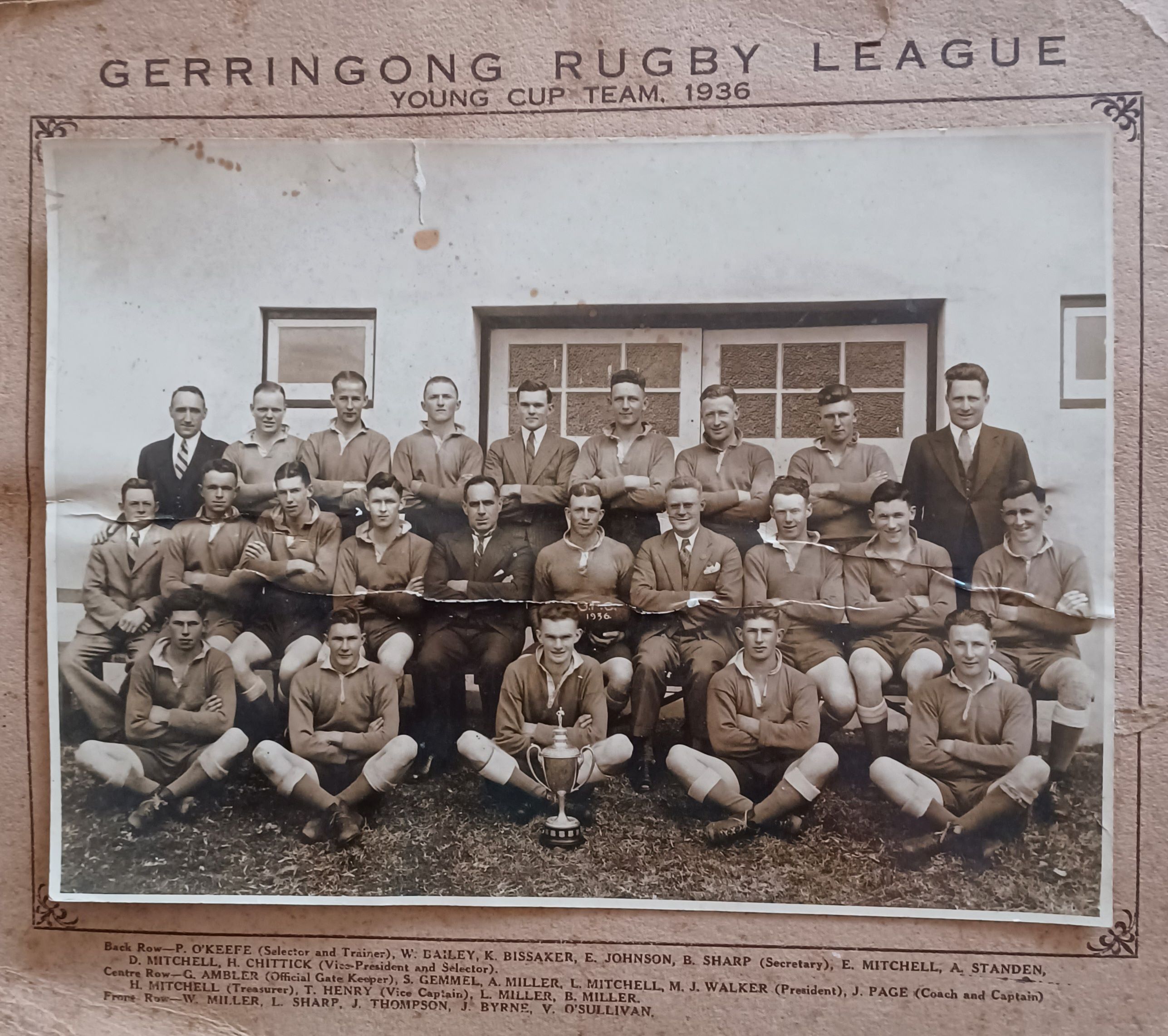
Gerringong Rugby League Club has a long and rich history. The Lions have won the most premierships in the South Coast competition and punch far above their weight for such a small town. Reading about local lads Hamish Stewart and Dylan Egan recently making their NRL debuts for the Dragons reminded everyone of the large number of Gerringong boys who have played in the top rugby league competition in Australia. Some have even represented our country.In 2014, Barry Ross wrote an excellent book on the history of the club which compares favourably with any such publication, even those of major Sydney clubs. His book, "Gerringong Rugby League Football Club: Celebrating 100 years 1914-2014: From our boys to Lions”, gave me great help for this article.Scrolling through eBay one day I came across an item that was a list of the premiers in the Wollongong District Rugby league competition. The Wollongong area has competed with success against touring international sides and produced and continue to produce champions, such as Graeme Langlands, Steve Roach and Jason Ryles.But scrolling through the list I glanced upon a premier team 100 years ago - Gerringong.Gerringong? What is a little town on the South Coast doing with a premiership trophy from 1925 in the Wollongong competition?Seeing that it is the 100th anniversary of that great year I thought I might reminisce about those “good old days”.At the start of that season it was thought it might be a good idea to join the South Coast and Wollongong competitions together. This did not last long. However, Gerringong decided to join the Wollongong competition. Some South Coast clubs were glad to see the back of the dominant Gerringong club. The rugby league had begun in 1914 and in the nine seasons since then Gerringong had won six.As the season developed it was clear Gerringong was the team to beat in a six-club competition. Gerringong finished minor premiers after winning 10 games, drawing and losing only one each. Glebe and Port Kembla finished equal second and under the rules at the time, those teams played off for the honour of meeting Gerringong in the final.Port won and the final was played at Kiama Showground on 29 August 1925.Now you can imagine the excitement. Port Kembla had been a powerhouse in the Wollongong competition for many years, and the new boys from Gerringong were minor premiers.Fans from both towns had to scour the district to find as many cars as they could to transport the crowds to the game. Not many people could afford cars in those days. Around 3000 spectators packed in to watch. Now it may not seem a big number compared to crowds today, but this was a record for the rugby league on the South Coast.The game itself lived up to all the expectations. The result was in doubt until the last minute. A missed goal from in front for Port was very costly. Mind you, Gerringong did score three tries, they just did not kick any goals! They won by the skinniest of margins, 9-8.A rugby match at Gerringong in 1909. Photo: Athol Noble CollectionAn interesting sidelight came from an injury to a Port player, S Harris who broke his collarbone in a tackle. Although I believe replacements were allowed, he refused to come off. When he had the ball, he had to tuck it under his one good arm left and just lean into the tackle. The Gerringong players were at a loss as to how to tackle him without causing him immense pain. On more than one occasion they stopped him by just holding him around the waist.The Gerringong team on that glorious day was Jack Miller, H. Morrow, Clive Cant, C. Miller, W. Guthrie backs, Vic Martin and Ray Miller halves, Vince Fields, J. Wall, Hedley Chittick, Roy Love, A. Burgess, S. Miller forwards.The back of the postcard featuring the match in 1909. Photo: Athol Noble CollectionIt is interesting to note that a lot of the names in the Gerringong Rugby League team reappeared in the Gerringong Cricket Club’s first-grade team that also won the local competition. Sport in Gerringong 100 years ago was particularly strong.For the pictures to accompany this article I would like to share with you, not photographs from 1925, but special ones from a time long before.Before Gerringong Rugby League Club was established in 1914 the local lads played Rugby Union. Once I went in search of an old cricket scorebook from 1894 that I knew Athol Noble had. Michael Tierney was kind enough to give me access to Athol’s collection that included, in addition to the aforementioned scorebook, a collection of Gerringong football memorabilia. Jack and Vince Fields. Photo: Athol Noble CollectionAmong that collection were some great old photos. One was of the two Fields boys, Jack and Vince. Both of these players were some of the best players Gerringong have ever had. And that is saying something.  Two other photos grabbed my attention. These were from games at what is now Michael Cronin Oval. One game was not dated but the postcard type picture stated it was a 1909 Gerringong v Berry rugby union game.Sitting at the eastern end of the oval one Friday morning, watching members of the club mark out the field for the big weekend game, I got to thinking that the goalposts looked a bit more secure than 1909. I also wondered if the Gerringong players would be wearing hats.

Russell revives forgotten warplane crashes in Kiama

12 April 2025, 8:00 AM

Local skies, lost stories and brave souls remembered ...  It was standing room only at the Kiama History Centre on Friday as fifth-generation local Russell Fredericks took the audience on a wild ride.Or rather, a tragic nosedive through three remarkable military aircraft accidents that took place in the hills and skies around our region.It was the kind of talk that made you lean forward, forget to sip your tea, and wish history had a rewind button. Gordon Bell, who opened the event with affectionate banter, joked that Russell was “chicken” - too young, at least compared to his Jamberoo pedigree.But nobody in the room doubted that his deep local knowledge and knack for detail were the real deal. With warmth, wit and a surprisingly slick PowerPoint for someone who claimed not to do technology, Russell took us through three aviation incidents that had been all but erased from collective memory.  The first story took us to 1939 and the side of Saddleback Mountain.A Hawker Demon fighter, piloted by young Jack Ohlmeyer from Clare, South Australia, spiralled out of the clouds and into the earth.His parachute failed. Locals from Jamberoo rushed to the wreckage.Wal Alexander, a dairyman, got there first.Jack died within seconds in his arms. His body, taken by ER ambulance, was eventually buried with full military honours back in Clare.Site of the Fountaindale Rd crash on Saddleback Mt Jamberoo Russell revealed that Jack was not only the first pilot from No.3 Squadron to die in WWII, but possibly the first RAAF pilot overall.The moment hit hard. Not just for history buffs, but for everyone who has walked the Saddleback trails and never known. On to 1943. A Bristol Beaufort bomber vanished above Foxground in dreadful weather.Beaufort Bomber Its crash was so secretive that locals did not even know it had happened, until Bullocky Brennan came upon the wreckage while carting timber with his bullocks. He found four crew members charred inside the plane, and one slumped against a tree, lifeless. Decades later, Gerringong Scouts and locals trekked to the site to install a plaque.It was a poignant reminder that war often leaves its mark quietly, deep in the bush, under the ferns, and in the memories of people like Molly Irvine, who rode from Clover Hill Rd across Wallaby Hill to milk cows for her neigjbours for two shillings and remembered those men as if they had just fallen.Then came 1957.A Fairey Firefly crashed west of Foxground during a training exercise.Fairey Firefly wreakage below Barren GroundsTwo young naval officers died instantly after mistaking Kiama’s lighthouse for Point Perpendicular. A flare seen shortly after raised false hope. It was just the intense heat igniting ammunition. A naval prayer was said on the hillside that night. It was an accident that could have been avoided by 20 feet. A tragic miscalculation that has haunted the escarpment ever since. Russell peppered the afternoon with vivid asides.A radar operator who was not believed when she tracked a Japanese flight over Kiama.A mysterious 1920 crash near Chapman’s Point. Bullock teams and Scout maps. The room chuckled and sighed in equal measure. The final slide called for a small gesture.To remember the airmen who died here, often in training, far from enemy fire but no less brave.Graham Kenderdine, aviation sleuth and son of a local wartime navigator, helped piece these stories together.But it was Russell’s voice, steady and respectful, that brought the forgotten back into focus. As we filed out, the murmurs said it all. “Incredible,” someone whispered. “I had no idea.” Neither did most of us. Until Russell gave us wings.You can read more about these historical aviation tales here.

A tough life for early European settlers

07 April 2025, 12:00 AM

By nature and circumstance, Australia’s early European settlers had dwellings of bark and poles.  In the rugged and untamed bush, it was far more convenient to take from the bush what it could provide in the way of a place to rest one's head, like a cave, a burnt-out tree-trunk and subsequently a slab-walled hut.  The quickest and easiest method was to use the available materials the bush could provide and that was bark and poles.No bushman was without an axe, and with this implement he could cut and erect a skeleton building of poles and sheet it over with bark stripped from a tree. The Australian stringybark provided the best covering but if that was not available, bark from most eucalyptus trees was a good alternative.Green bark had a tendency to curl as it dried, so the roofing had poles laid lengthwise on the top section to keep it flat and also to prevent it being dislodged by wind.  Walls could be bark or slab - a decision of the builder and the estimated permanency of the structure. Loose boards provided a doorway.That this could be the very first building of a man and his wife in the early days of settlement is legend. Poets and writers wax lyrical about the sense of isolation and privation, but to hear of it first-hand from one's grandparents and to see their weathered hands is to know the truth of it.After building a home there were many things to consider - beds were made of hempen bags strung on poles, which was slightly better than sleeping on the earth, especially when a thunderstorm flooded the inside of the hut.  How to keep provisions dry and free from ants was an ever-present battle. It may be years before circumstance and availability when corrugated iron could be used to roof the dwelling, and sawn slabs replaced the bark walls. Corrugated iron was used to provide a chimney and fireplace at one end of the hut, having the structural timbers on the outside for safety.  Sparks were a constant danger once the bark walls had dried. Water was carried from mountain streams in tin buckets and billies.Toilet facilities consisted of a hole in the ground walled in by sheets of bark which was propped,and held in place by shortened logs, with the roof also of bark. A crude and serviceable seat was a wooden slab cut smooth with a square hole morticed through appropriately, and rested on round blocks or logs, or in many cases a single pole suspended on forked sticks at either end and this was known as the ‘long drop'. A neighbour could be a half-hour walk through the forest, even after a walking track had been cleared. To have a neighbour was a bonus; there would be the inevitable case of an accident to either party during the hard and dangerous clearing of the brush and forest and there was also the necessity of a woman to assist at births, unskilled as she invariably was, and a baby brought a new dimension to the striving couple.  It could be more than a day’s walk or further to the nearest settlement - if there was a settlement at all. Returning with supplies or necessary means of survival this could mean a hazardous adventure as well, only to be repeated if the burden of fencing wire or wire netting was too heavy to be managed on the one journey.  Men became beasts of burden until a horse or a bullock could replace him, and the settler was a fortunate man if he had an area of grass upon which to graze his animals.  Nethervale, just south of Kiama. Photo: Emery Family CollectionTo have the fortune to possess two bullocks to yoke raised the status of a pioneer immensely for he then had the means of cultivation and hauling materials and logs into position for fencing.His crops would be damaged by the marauding kangaroos and wallabies seeking succulence, with the only means of preventing their incursion was eternal vigilance, lighting fires and tending them at nighttime being a necessary addition to the daily rounds, with fires in themselves a hazard if the forest litter should catch alight.  Wives shared these duties to give their man a chance to rest, and a kangaroo dog or two had to be added to the set-up.If the hapless settler had the luck to have cedar trees in his location, the harvesting of this timber would be a means of cash if it could be taken to one of the few ports of call of the sailing ships plying the coast and thence to the city markets.  This involved the cutting of tracks through the bush and the hauling or carrying the lumber some miles in many cases, a painstaking task at best. Although the commodity was mostly received by agents at the wharf-side, and who had the responsibility of payment for the article the cutter received little recompense in comparison to the retail value when received in Britain when sent on by the wily trader.  It was the beginning of the appearance of the adventitious “middleman”' or trader who bought and onsold produce for personal profit or loss. During the next 20 years our settler may have a family of seven, a small herd of cattle and a few accoutrements in the way of labour-saving devices, a plough and six or eight bullocks, a stock horse and a dray.  His children may have all been born without the aid of a doctor, and a neighbour's wife may have developed into a renowned midwife servicing a small community striving to achieve enough recognition to have a local town available to them as a trading post, where farm produce like eggs and milk and butter and hides could be traded for tea and sugar and farm necessities. His wife was usually never recognised for the duties she was expected to perform and her contribution to the union. However, she stuck to job of having and raising children and supporting her man with a stoicism not unremarkable in her day but liable to be forgotten and unrehearsed 150 years later.

1-20 of 78