
The four-legged therapists: Why Jerrara’s RDA is a lifeline for families

Myah Garza
05 February 2026, 10:00 PM
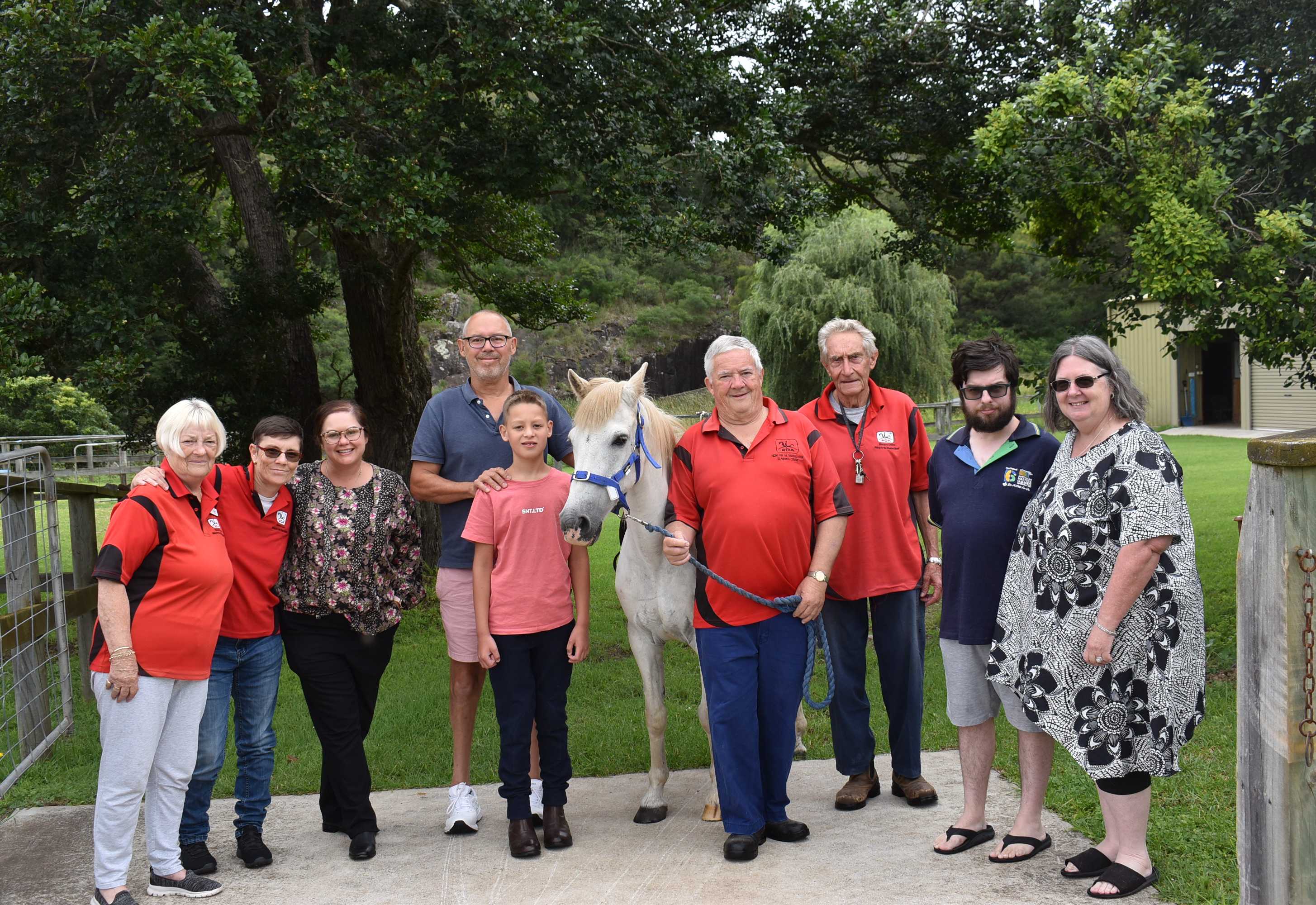 Left to Right: Carmen Power, Dani Scott, Tenele Constable, Mike Taylor, Archie Taylor-Wright, Bluey the horse, Kerry Southwell, Norm Power, Luke Vanduin, Justine Proksch
In the quiet, rolling hills of Jerrara, horses are doing something no doctor could: helping a non-verbal child find his voice.
At the Riding for the Disabled Association (RDA) Illawarra Centre, the air is still, but the impact is profound. It’s a place where "magic moments" are part of the weekly schedule, and where the bond between a horse and a human transcends the need for words.
For those who are dedicating their time at the site, the reward isn’t in a pay cheque – it’s in the giggles and breakthroughs.
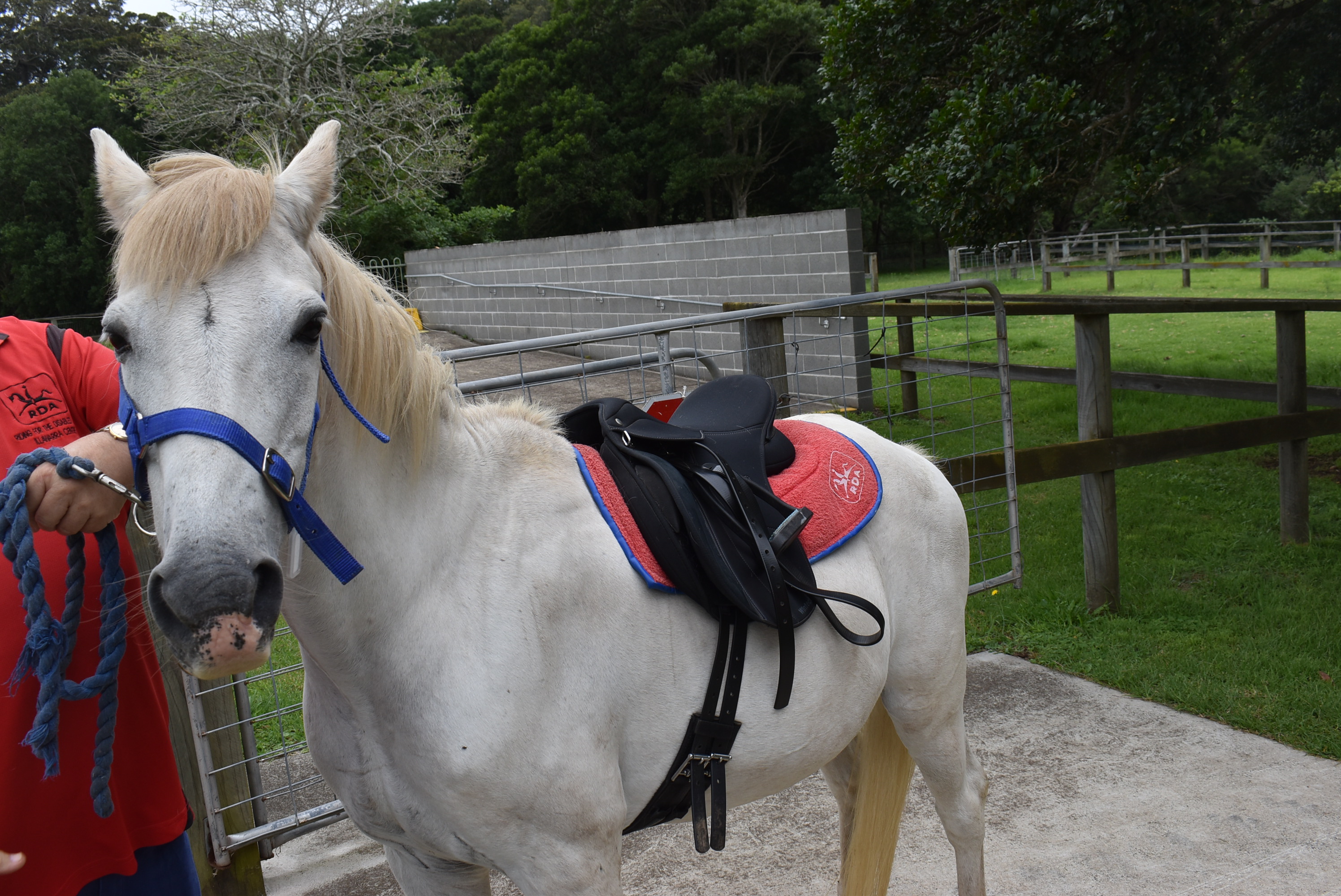
Bluey
One story that has become legend at the centre involves a young boy, a grey pony named Chloe, and a father who just wanted to hear his son’s voice.
"We decided to get Chloe into a slow trot down the lane," RDA secretary Carmen Power recalled, the emotion still evident in her voice. "Suddenly, the dad was in tears. He hadn’t heard his son speak – and there he was, shouting: ‘More! More!’ I still come out of here with goosebumps. That’s why we do it."
While these moments feel like magic, they are backed by significant clinical evidence.
Equine therapy is increasingly recognised as a multimodal intervention that uses the horse to enhance core impairments in Autism Spectrum Disorder (ASD).
Research shows the horse's rhythmic movement improves social communication, sensory processing and emotional regulation.
For children with Cerebral Palsy, the benefits are equally striking. Because a horse’s walking gait mimics the human pelvis’s natural movement, riding helps improve trunk posture, muscle tone and gross motor function.
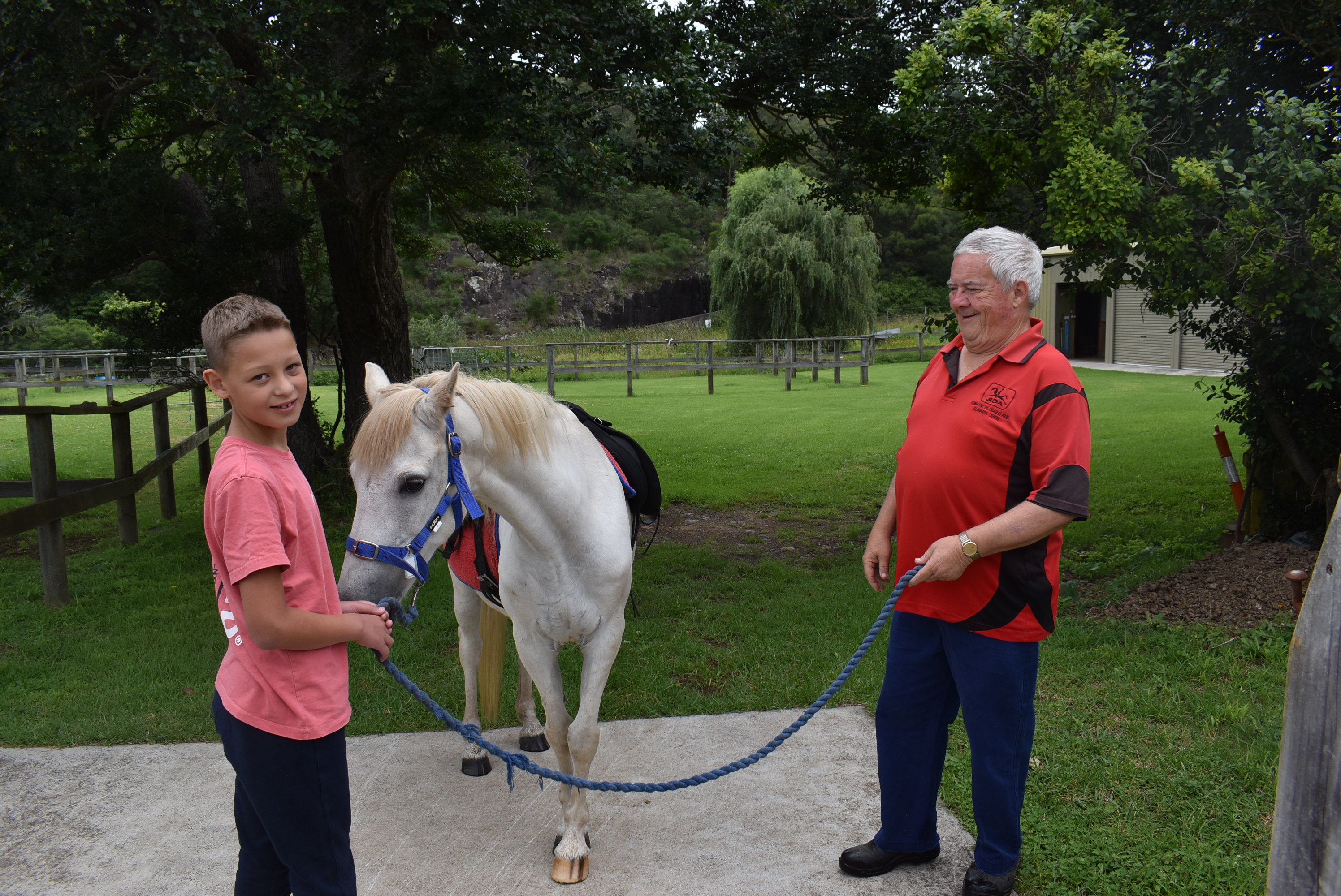
Archie, Bluey, and Kerry.
Archie Taylor-Wright, 9, has tactical cerebral palsy, autism, and Level 2 ADHD. When his physiotherapist recommended RDA, his family saw the results immediately.
"One hour of horse riding is like three hours of physiotherapy," explained coach and committee member Kerry Southwell. "They use muscles in the saddle that a physio can’t even touch."
The "therapists" here have four legs and a lot of patience.
The centre cares for nine horses, including Bluey, a little grey pony who "clicked" with 13-year-old rider Carter, and Tricky, an impeccable thoroughbred who, despite her racing pedigree, is "the biggest sook you’ve ever seen".
"She’s the laziest thoroughbred we’ve ever come across," laughed Power. "She doesn't even walk; she mopes.
If you could piggyback her, she’d be happy. But put a rider on her, and she never puts a foot wrong. She counterbalances them. If they start slipping to one side, she’ll walk across to keep them centred … It’s like a switch goes off."
For parents, the RDA is more than an extracurricular; it’s a lifeline. For Carter, who is on the spectrum, the rhythm of the horse provides emotional regulation that lasts all week.
"His teachers would say Tuesday to Thursday – after he’s been riding – are his best days at school," said his mother, Tenele Constable, with tears in her eyes.
The confidence Carter gained allowed him to stand up and give a speech about RDA to his entire school at the end of Year 6, a tremendous milestone Tenele attributes to his time in the saddle.
The breakthroughs aren't limited to school speeches. Carmen recalled a rider with CP who arrived using a walker and struggled to move across the grass.
"He needed two side-walkers just to keep him on the pony. But after a while, he gained so much strength and balance that we were just there for support – not to hold him up. He was doing it himself."
Assistant coach and mother Justine Proksch shared a similar journey with her son, Luke Vanduin, 34.
"He was so shy, a late walker. We put him on a pony when he was barely two. He couldn't walk at the time, but he could sit up.
You can't pedal a push-bike when you can't walk, but suddenly, here he was on a pony, grinning like a Cheshire Cat. For his fifth birthday, all he wanted was pony rides for his friends."
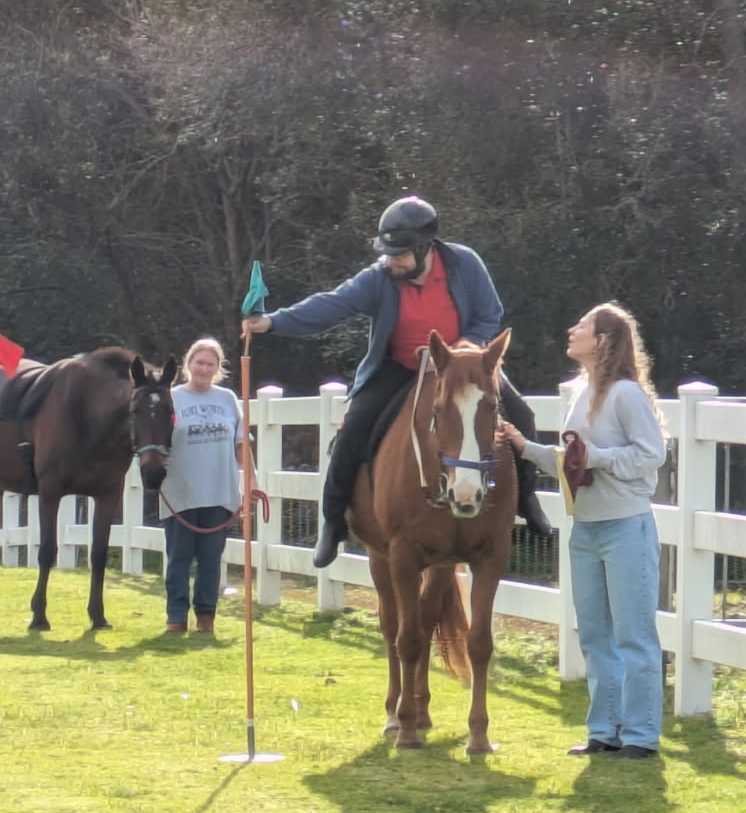
Luke at RDA
Luke still rides with RDA Jerrara.
The centre is kept alive by a crew of dedicated South Coast locals. Some, dubbed the "farm boys," have been volunteering for over 33 years.
They arrive at the crack of dawn to drive the old tractor, slash the paddocks, and repair fences damaged by the notorious Jerrara natural springs.
"I became involved 33 years ago and I’m still here doing farm boy work," volunteer Norm Power said. "I liked it that much I just had to come back."
Despite these outcomes, the Jerrara centre does not receive government funding.
It relies on lesson fees – which at $30 barely cover electricity and water – and "miracle" donations.
A few years ago, the Parliament House Cricket Club donated $10,000 to replace an ageing, 25-year-old wooden arena.
"We got a brand-new, spick-and-span arena, and then COVID hit," Kerry said.
"We had this beautiful arena and nothing to do with it for three years!"
The centre has three riders on Tuesdays and Saturdays, but the need for help is constant.
Because some riders require up to three volunteers at once – one to lead and two to "side-walk" for safety – the program's capacity is entirely dependent on community hands.
"You don't need to be a horse expert," the team stresses. "We’ve had 'horse virgins' come in who didn't know how to do up a bridle, and now they’re part of the furniture."
If you’re a local looking to make a difference, Jerrara’s best-kept secret is waiting for you.
Volunteers are always wanted and encouraged to help support the riders and the nine very patient horses that call this valley home.
Contact RDA Illawarra via rdansw.org.au or visit their Facebook page to enquire about volunteering or riding placements.
NEWS