
How a one shilling land sale 70 years ago is causing biosecurity drama

Paul Suttor
17 January 2026, 11:00 PM
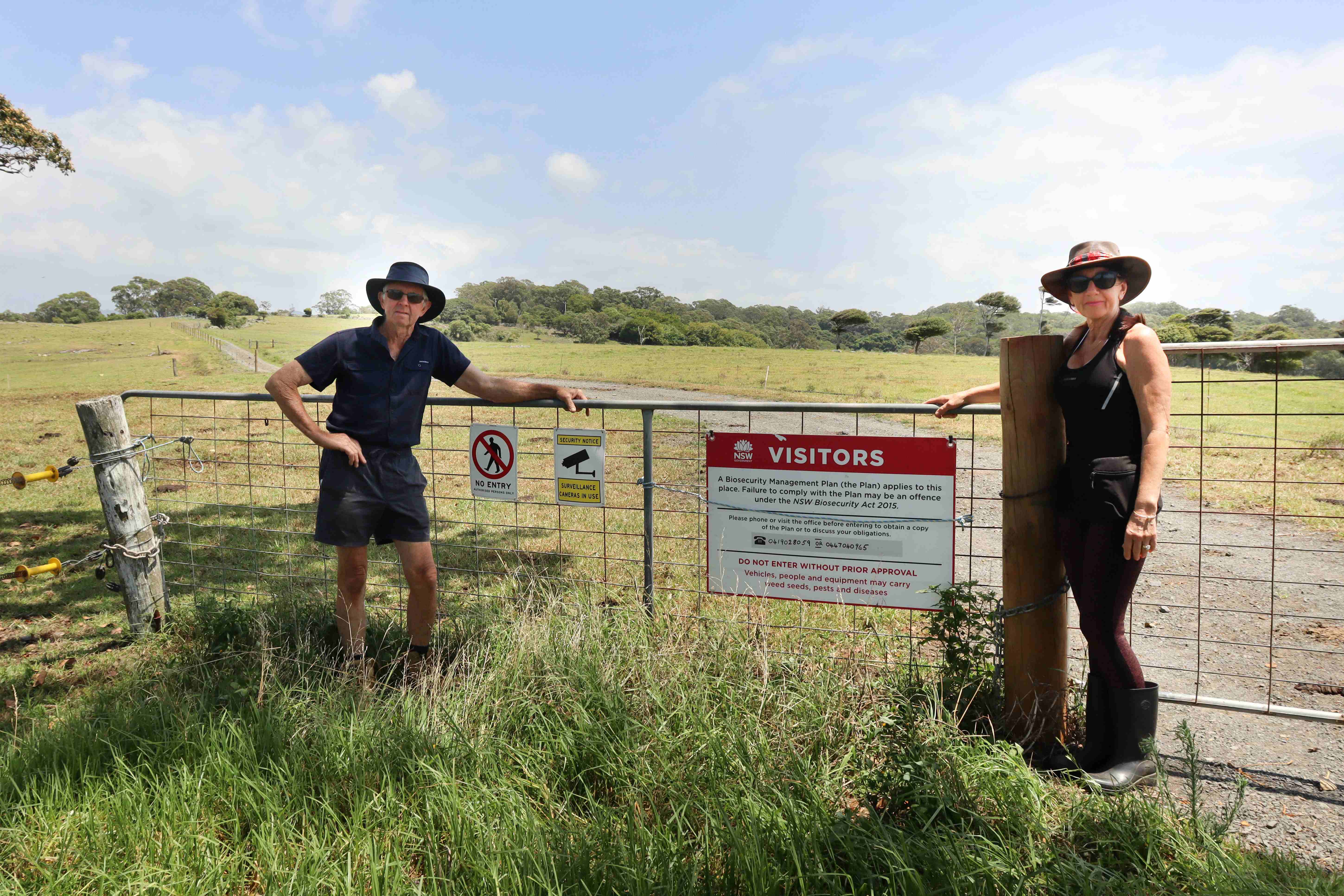 John and Janelle Kelleher. Photo: Ella Gunning
Dunmore farmers John and Janelle Kelleher are paying the price for a bad decision back in 1956 where John’s uncle allowed an easement to be put through their farm for the convenience of a farmer who had a block of land at the back of their property.
The easement was only 12 foot wide and half a kilometre long, mainly for horses, carts, cattle and tractors.
Now the back block has a house on it which is rented out to the public and at present, the tenants and all their visitors are not required to sign in on the visitor log book which is part of the farm’s biosecurity plan.
Anyone can go through this part of the farm at any hour of the day and night the Kellehers have no knowledge of where they have been and if they have been in contact with any exotic diseases, weeds and pests because of this, they want the law to change.
The Kellehers had been in contact with former Kiama MP Gareth Ward about the issue and have recently held discussions with new state member Katelin McInerney.
They have also sought legal advice but have been told that unless the State Government amends the Biosecurity Act then they are stuck with the current situation where they have to hope that anyone who uses the easement signs in beforehand.
“We want that law changed to accommodate biosecurity, because at the moment, anyone can go up there,” Janelle said.
“We’ve got cattle up there, and our cattle could be exposed to anything.
"The biosecurity act was created in 2015, then the regulation 44A2 was changed in 2017 to give exemptions to easements, which is now putting our
farm in a biosecurity risk.”
If people have visited foreign countries, they may be unaware they are bringing diseases to Australia and when an outbreak occurs on agricultural land, the effects can be devastating.
“They don’t have to sign in,” John said. “Any Tom, Dick or Harry can just walk up there.
“They could have been overseas in a place where they’ve come into contact with anything. Who knows what. So the biosecurity isn’t protected anymore.
“If any disease breaks out, a 10-kilometre radius goes up where nothing can go in or out of that area.”
Janelle added that the Australian government loves to talk up the strength of the national biosecurity protocols but this law makes a mockery of those claims.
“It’s so important to our farmers. But what the politicians say is a load of crap. Our whole herd could be wiped out. It’s ridiculous,” she said.
“People should have to sign in and let us know where they’ve been. We want restrictions for our cattle just in case there is an outbreak so that we can retrace back where these people have been and try to work out what happened.”
The Kellehers had five cattle die 15 months ago due to lungworm, prompting them to upgrade the biosecurity at their breeding farm.
At the moment they have got about 80 head of cattle near the easement, using a strip-grazing farming technique where John changes the placement of the electric fences each day to give the paddocks time to regenerate.
“We want other farmers out there that are going through what we’re going through to know that we’re here.
“We want them to ring us and join us in trying to change this law so we can make it better for farmers.”
The Kellehers would like any other farmers experiencing problems due to this law to contact them on 0447 040 965.
NEWS