
History still in the making as Kiama Historical Society plans 150th Anniversary

Myah Garza
07 January 2026, 7:00 AM
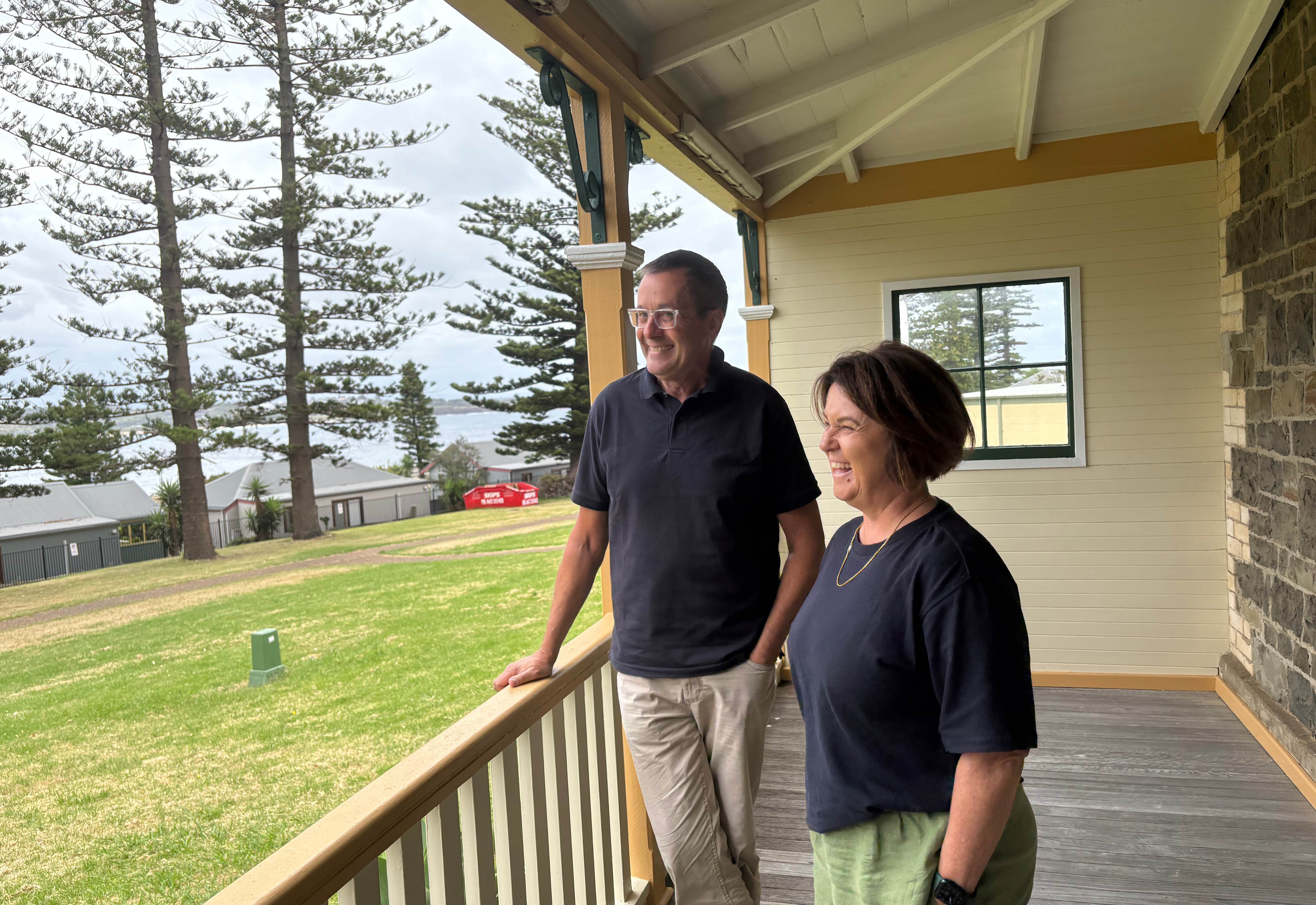 Tony Gilmour of Kiama Historical Society and Councilor Erica Warren at Pilot's Cottage
History is not something Kiama visits only on anniversaries. It lives in the stone underfoot, the harbour walls, and a small cottage overlooking the sea.
As the Kiama Historical Society begins early planning for its 150th anniversary in September, president Tony Gilmour sees the milestone not only as a backward glance, but more as an invitation forward.
“Because it’s a historic town, there’s always something to celebrate,” Gilmour said.
At the heart of those celebrations is the Pilot’s Cottage, one of Kiama’s oldest surviving buildings and the centrepiece of the Historical Society’s work since it was founded in 1976.
Built to house the harbour pilot – the person responsible for guiding ships safely in and out of port – the cottage later became a museum through a Commonwealth-funded heritage scheme and has remained intact ever since.
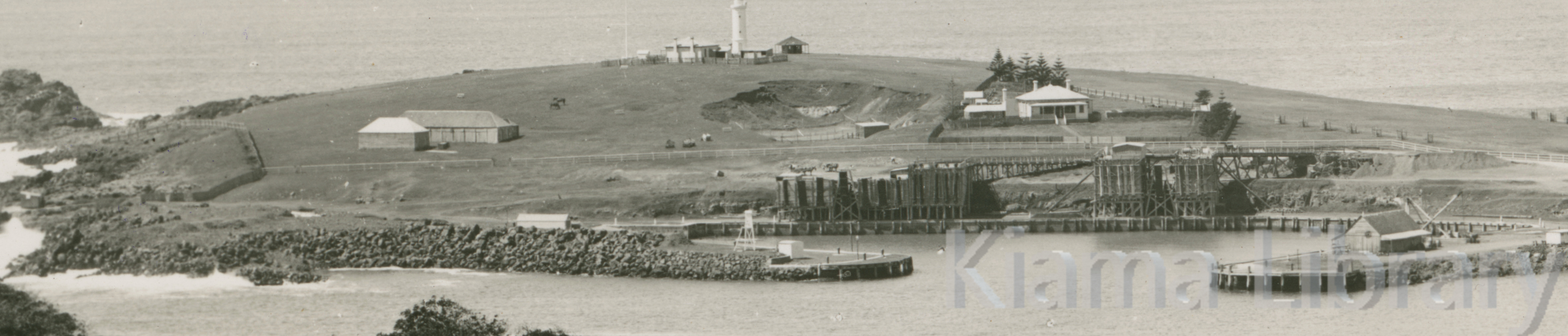
Looking towards Robertson Basin & Blowhole Point from Pheasant Point
“It’s quite rare,” Gilmour said. “This is seen as being probably the best preserved pilot’s cottage.”
It is also one of just 40 maritime museums in Australia, and among fewer than ten in New South Wales.
The cottage tells a much bigger story than its modest size suggests.
Long before Kiama became known for cafés, coastal walks and real estate, it was an industrial town built on natural resources – especially basalt.
“All the quarries you see around here, which are now converted to leisure centres and other places, were mined for that material,” Gilmour said.
“That material, basalt, is being used throughout the colony of New South Wales.”
Kiama stone was shipped to Sydney to pave streets and line railway tracks. “Virtually every railway line in NSW has Kiama stone between it,” he said.
Transporting that stone was not easy. Before the harbour existed, horses and small, often unsafe vessels were used, with some ships sinking under the weight of their cargo.
The solution was the construction of a proper harbour, opened in 1876 by Sir John Robertson, followed by the Pilot’s Cottage in 1881 and a lighthouse five years later.
“That’s when we went through a resource boom,” Gilmour said. “We didn’t have gold, we had blue metal, which in itself was like gold.”
The wealth generated from basalt and earlier cedar logging shaped the town’s streetscape. “That’s why we have Manning Street with gorgeous town hall buildings and everything,” Gilmour said.
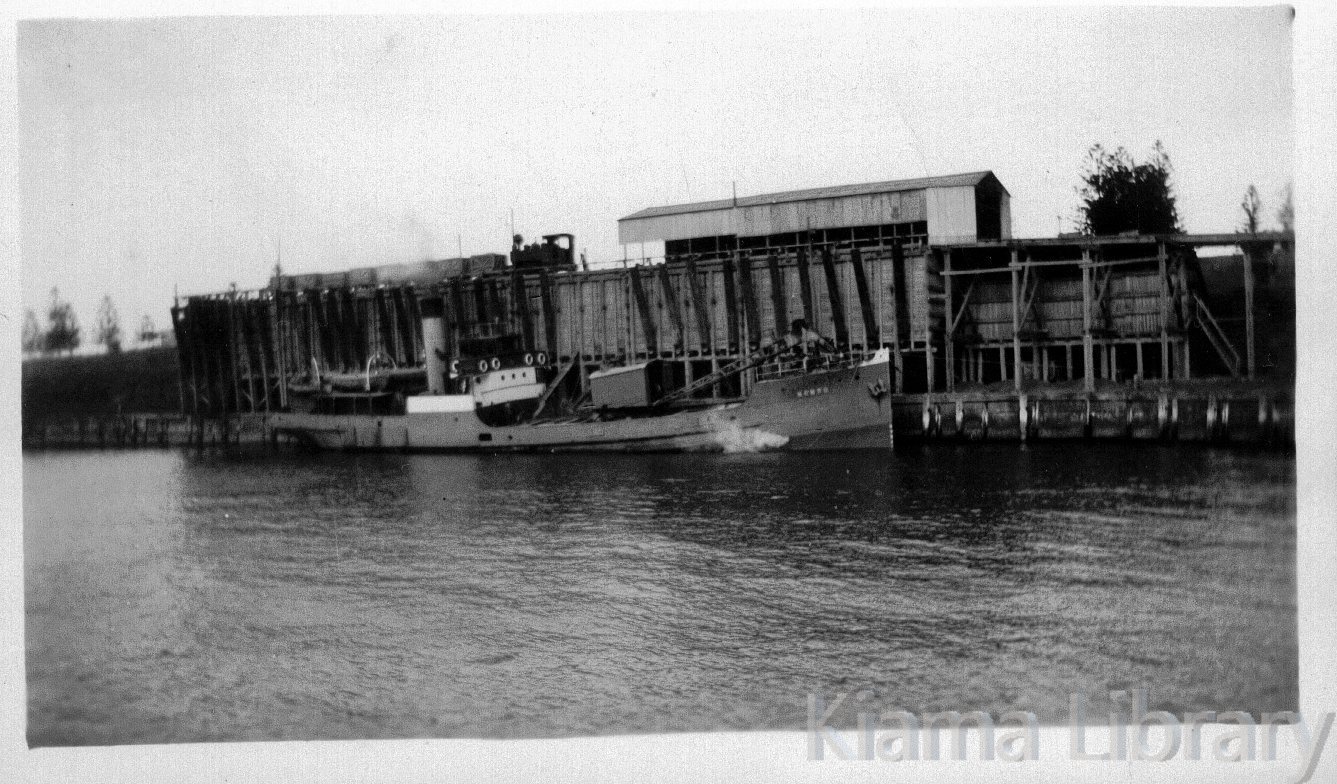
SS Bombo docked at Kiama Harbour. Note the Steam Engine on the upper level of the hoppers bringing the stone from the quarry to be loaded onto the ship.
“It didn’t just happen automatically.”
Cedar, once abundant through the Jamberoo Valley and Kiama Downs, was stripped by the 1870s, shipped as far as London.
Today, only traces remain, including small sections still visible inside the Pilot’s Cottage.
Walking through the museum, Gilmour points to rooms that once served as bedrooms and now house carefully curated displays.
He plans to refresh them ahead of the anniversary.
“One of my plans in the History Society is to reconfigure and recreate these displays – bigger pictures, better wording, nicer font,” he said.
But the future of the museum is not just about presentation.
Over the past decade, the Society has reshaped how Kiama’s story is told, particularly when it comes to Aboriginal history.
“When I first joined the committee, I was told ‘no, we don’t do Aboriginal history’,” Gilmour said. “So all those tens of thousands of years, just forget about it.”
Working with local Elder Auntie Joyce Donovan, the Society has since recorded Aboriginal stories and reframed long-held narratives.
Even a model commemorating George Bass, long described as “discovering” Kiama, has been relabelled to acknowledge Wadi Wadi Country.
“He didn’t discover it,” Gilmour said. “He was welcomed.”
That shift was recognised recently when the Pilot’s Cottage received an IMAGinE Award from Museums & Galleries NSW, beating out larger institutions.
“Not many history societies are embracing Aboriginal history – we are,” Gilmour said.
The Society hopes the 150th anniversary of the harbour will be a grassroots, community-led celebration focused on boating, heritage and shared stories.
 Robertson Basin with the Hoppers to the left, a ship waiting to be loaded with blue metal coming into dock at the Hoppers
Ideas for the new year include expanded opening hours, updated publications, community events in the cottage’s meeting room, and stronger links with schools and tourism groups.
“This is a space we want to get more use out of,” Gilmour said. “If more people know it’s here, we’ll have more members, more volunteers, and we can stay open.”
With 190 paying members, growing volunteer numbers, a new regular history segment on Kiama Community Radio, and plans to begin recording oral histories from older residents next year, the Society is resisting the trend of declining local history groups.
“Most history societies are withering,” Gilmour said. “We’re not in that situation.”
For Gilmour, preserving Kiama’s past is inseparable from protecting its future.
“We want to stay with that community and village feel,” he said. “Part of that is preserving the old buildings, and part of it is ensuring any development is reasonable.”
As planning for the 150th anniversary gathers pace, the message from Kiama’s historians is clear: history here is not finished. It is still being told
NEWS