

Adventures in Climate Change: Special edition - 2025 in review

Local Contributor
12 January 2026, 7:00 AM
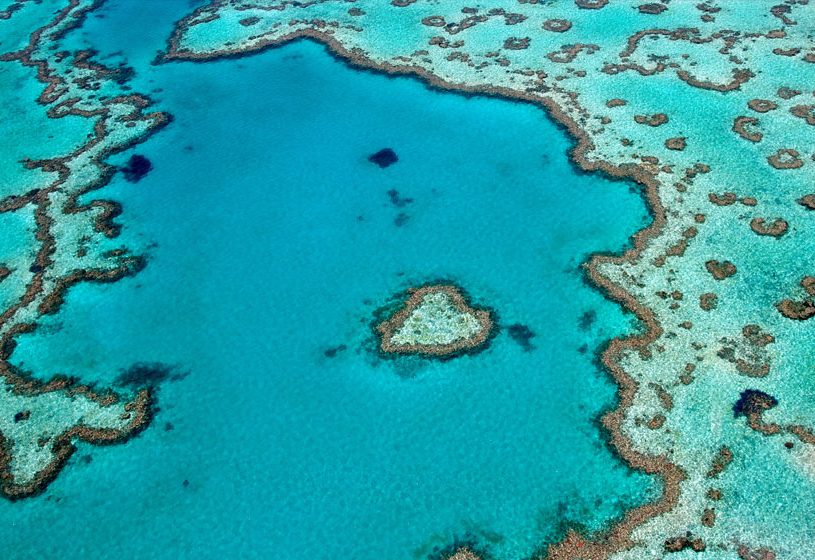 The Great Barrier Reef is under threat. Photo: greatbarrierreef.org
By Ray Johnson
Welcome to this special edition, a curated review of climate change news throughout the year. The emphasis is on the most significant global and Australian developments, month by month.
The year’s events were dominated by COP30, (the Conference of the Parties to the Paris Agreement) where countries provided Nationally Determined Contribution targets (NDCs) for 2035.
It’s important to remember that the main drivers of climate change are population and economic growths, unequivocally since 2007 according to the science.
There are many vested interests for governments to contend with.
January:
- The World Meteorological Organization (WMO) confirms “2024 is the warmest year on record, based on six international datasets. The past 10 years have all been in the Top Ten, in an extraordinary streak of record-breaking temperatures.”
- The United Nations declares 2025 the International Year of Glaciers’ Preservation. “Glaciers are retreating at unprecedented rates, reshaping landscapes and the world as we know it.”
- US President Donald Trump signs an Executive Order to withdraw the United States from the Paris Agreement.
February:
- January 2025 declared the warmest January on record according to two leading international datasets (Copernicus Climate Change Service and US National Oceanic and Atmospheric Administration).
- Most large emitter countries (e.g Australia) miss key date for submitting updated 2035 NDCs for analysis in the lead up to COP30 (November 2025).
March:
- Thirty years since the beginning of the global effort to engage with the climate crisis. On 21 March 1994 the United Nations Framework Convention on Climate Change (UNFCCC) entered into force.
April:
- China, the world’s largest greenhouse gas emitter, says it will announce 2035 NDCs before COP30. The first time China has set NDC targets.
May:
- WMO forecasts “70% chance that the five-year average warming for 2025-2029 will be more than 1.5°C.”
- The ALP wins Australia's federal election with low primary vote (34.6%). Preference flows drive a significant House of Representatives majority. In Government but not in ‘power’ as no majority in Senate.
June:
- A University of New South Wales expert says Australia’s latest National Greenhouse Gas Inventory report shows “Land Use, Land-Use Change and Forestry (LULUCF) sector ... is the single largest reason for the significant reduction in Australian emissions. Without accounting for land use, Australia’s emissions have only decreased 3% since 2005, not 27%.”
- The 2024 Indicators of Global Climate Change report says “The indicators show that human activities are increasing the Earth's energy imbalance and driving faster sea-level rise compared to the [IPCC] AR6 assessment. ...there is evidence that the rate of increase in CO2 emissions over the last decade has slowed compared to the 2000s.”
- NSW Environment Protection Agency releases NSW State of the Environment 2024 report. “Drivers” chapter is last in document (p603). “Increases in population and economic activity are driving significant changes in the environment and human health. Planning for sustainable growth can help to alleviate these impacts.”
July:
- World Population Day (11 July): At current rate of growth, global population is doubling every 82 years. (World Population Dashboard) Expected to reach nine billion by 2037.
August:
- World Weather Attribution claims “Weather conditions leading to deadly wildfires in Türkiye, Cyprus and Greece made 10 times more likely due to climate change.”
September:
- President Xi Jinping announces inaugural NDC: “China will, by 2035, reduce economy-wide net greenhouse gas emissions by 7 per cent to 10 per cent from peak levels, striving to do better.”
- Australia's first National Climate Risk Assessment released, looking at “our economy, communities, agriculture, health, infrastructure, and ecosystems.”
- Australia announces its second NDC to “set our 2035 climate change target at a range of 62% to 70% reduction on 2005 emissions.”
- Australia’s Minister for the Environment and Water issues the final approval for the extension of gas operations at Woodside Energy’s North West Shelf Project until 2070. The Australia Institute described the decision as “a climate, economic and energy security disaster.”
- The Potsdam Institute for Climate Impact Research releases Planetary Health Check 2025 showing that seven of nine planetary [system] boundaries have now been exceeded. “We are witnessing widespread decline in the health of our planet … Failure is not inevitable; failure is a choice. A choice that must and can be avoided.”
October:
- A consortium of 160 researchers from 87 institutions across 23 countries releases The Global Tipping Points Report 2025. The report includes case studies on the Amazon Rainforest, the Atlantic Ocean Circulation, Warm-Water Coral Reefs and Mountain Glaciers. “The goal of the Paris Agreement to limit global warming ‘well below 2°C’ or 1.5°C will not prevent coral reefs from irreversibly passing their thermal tipping point.” Say goodbye to the Great Barrier Reef.
- ABS says 2024 fertility rate was 1.481, well below the replacement rate of 2.1 (last seen in 1976). Does Australia’s multicultural society want a growing population?
November:
- COP30 (Belém, Brazil 10-21 November) closing address by the UN Climate Change Executive Secretary Simon Stiell: “I’m not saying we’re winning the climate fight. But we are undeniably still in it, and we are fighting back.”
- The World Economic Forum noted [COP30] “ … it fell short of unlocking major progress. Parties advanced on adaptation funding, indicators for a global goal on adaptation and a just transition, but no formal agreements were reached on fossil fuels and deforestation roadmaps.”
- The BBC described COP30 as “deeply divisive” and noted a failure “to secure new fossil fuel promises.”
- Australia’s Climate Change Authority releases 2025 Annual Progress Report. Says rate of Australian emission reductions needs to double to reach 2030 target (43%) and triple to meet 2035 target.
December:
- Tenth anniversary of the Paris Agreement, adopted by 195 parties at COP21 on 12 December 2015. While there are many achievements the main target of 1.5°C seems currently beyond reach.
- Climate Action Tracker (CAT) shows (as at 10 December 2025) 119 countries have submitted 2035 NDCs. Only two countries of the 59 CAT analyses are compatible with reaching 1.5°C (UK and Norway). 74 countries have not submitted a 2035 NDC target.
- Statista claimed (12 December 2025): “In 2025, the world's gross domestic product amounted to approximately 117.2 trillion U.S. dollars, compared with 111.1 trillion in 2024.” A rise of 5.5 per cent.
- Australian Bureau of Statistics (ABS) releases Estimated Resident Population data for the year ended 30 June 2025. Annual growth was 420,100 people (1.5%) comprising a natural increase of 114,600 and net overseas migration of 305,600.
NEWS